Where Death Gets Declined at the Border: The Arctic Town That Said 'Not Here, Not Now'
The Ultimate NIMBY Problem
Imagine living in a place so remote that the nearest hospital is hundreds of miles away, the sun doesn't rise for months at a time, and polar bears outnumber residents. Now imagine that same place has a municipal policy that essentially says: "You can live here, work here, raise a family here — but you absolutely cannot die here."
Welcome to Longyearbyen, Norway, population 2,100, where death isn't just inconvenient — it's been administratively banned since the 1950s.
This isn't some medieval superstition or quirky tourist attraction law that nobody enforces anymore. This is a very real, very practical policy that affects real people in real ways. When residents of this Arctic settlement get seriously ill or reach the end of their lives, they're literally shipped out to the mainland to die somewhere else.
When Mother Nature Refuses to Cooperate
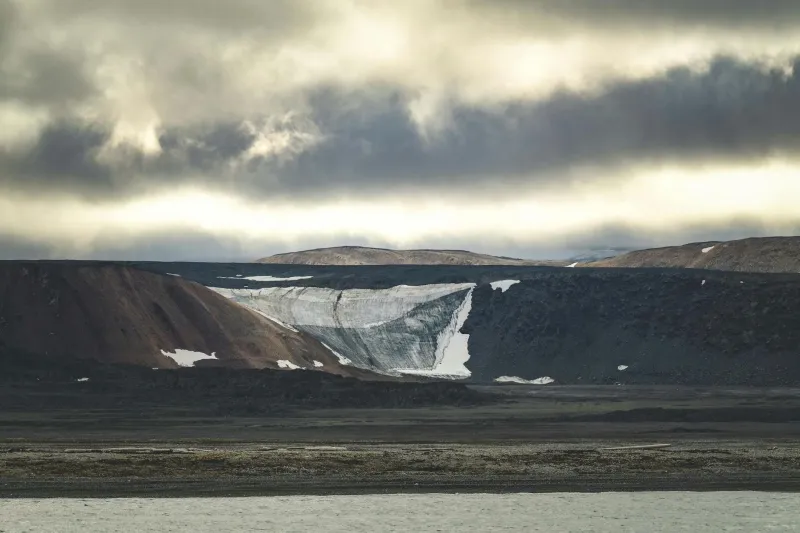
The reason behind Longyearbyen's death ban sounds like something out of a horror movie, but it's pure science. The town sits on permafrost — permanently frozen ground that never thaws, even in summer. While that might sound convenient for food storage, it creates a massive problem when it comes to burials.
Bodies buried in Longyearbyen's permafrost don't decompose. At all. Ever.
The town's tiny cemetery, established in the early 1900s, stopped accepting new residents in 1950 when officials realized they had a growing collection of perfectly preserved corpses on their hands. These weren't mummies or bog bodies — these were recently deceased people who looked exactly as they did the day they were buried, decades earlier.
For a small Arctic community trying to build a sustainable future, having a cemetery full of non-decomposing bodies wasn't just creepy — it was a genuine public health concern.
The Accidental Scientific Goldmine
Here's where the story takes a turn that sounds like science fiction but is absolutely real: some of those preserved bodies have become invaluable to medical research.
In 1998, scientists exhumed several victims of the 1918 Spanish flu pandemic from Longyearbyen's cemetery. Thanks to the permafrost's natural preservation properties, researchers were able to extract live, viable flu virus samples from lung tissue that was nearly 80 years old.
These samples helped scientists understand one of history's deadliest pandemics and contributed to modern flu research and vaccine development. The bodies in Longyearbyen's cemetery had accidentally become a frozen medical library, preserving genetic material that would have been impossible to study anywhere else in the world.
Life in the Land of Mandatory Immortality
So what does it actually mean to live somewhere where death is banned? For healthy residents, it's mostly a philosophical curiosity. But for anyone dealing with serious illness, aging, or chronic conditions, it's a very real consideration.
Pregnant women in their final trimester are flown to mainland Norway to give birth, partly because of limited medical facilities, but also because of the risk of complications. Elderly residents often make the difficult decision to move away from their community before their health declines too much.
The policy creates some genuinely heartbreaking situations. Families sometimes have to choose between staying together in Longyearbyen and being able to care for aging relatives. Long-term residents who've spent decades building their lives in this unique community must eventually leave if they want to die with dignity in a place that can actually accommodate their remains.
More Than Just a Quirky Law
Longyearbyen's death ban isn't enforced by cemetery police or death inspectors — it's maintained through practical healthcare policies. The town's small hospital can handle basic medical care and emergencies, but anyone with serious conditions requiring long-term care or end-of-life support is medically evacuated to facilities in mainland Norway.
This creates a strange situation where Longyearbyen is simultaneously one of the most isolated places on Earth and also a community where nobody dies of old age. Residents joke that it's the world's only place with a 0% natural death rate, but the humor masks a real challenge of living in such an extreme environment.
The Unintended Consequences of Geography
What started as a practical solution to a unique environmental challenge has created one of the world's strangest municipal policies. Longyearbyen's death ban has influenced everything from the town's demographics (it skews younger than most communities) to its social structure (long-term planning takes on a different meaning when you know you can't retire there).
The town has also become a fascinating case study for researchers studying extreme communities, Arctic policy, and the intersection of environmental science and human society. It's a place where the laws of nature — specifically, the law that says dead things should decompose — have been overruled by the laws of physics.
When Reality Outdoes Fiction
In most places, "till death do us part" refers to marriage vows. In Longyearbyen, it's municipal policy. This Arctic town has accidentally created a situation where the phrase "you can't take it with you" has been replaced with "you can't leave it here either."
The next time someone complains about their hometown's weird local ordinances, they should consider Longyearbyen — where the local government has successfully banned one of the few things that's supposed to be universally inevitable. It's proof that sometimes the most unbelievable stories aren't fiction at all — they're just what happens when human communities meet the extremes of the natural world.