The Double Owner: How One Farmer Paid Taxes on the Same Land Twice for Three Decades
When Paperwork Goes Wrong, Really Wrong
Imagine getting two tax bills for the exact same piece of land — and paying both of them for thirty years without realizing it. That's exactly what happened to Harold Brennan, a Missouri corn farmer who became the unwitting victim of one of the most absurd clerical errors in American property law history.
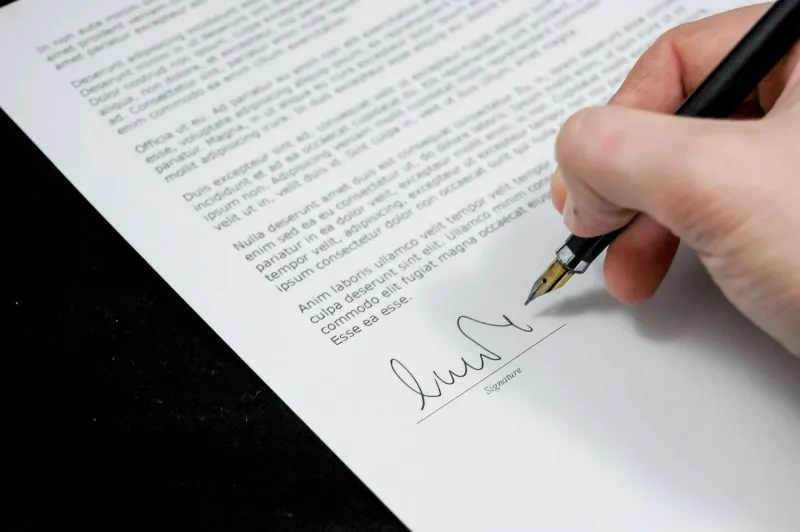
In 1967, when Brennan purchased his 160-acre farm outside Sedalia, Missouri, everything seemed perfectly normal. He signed the papers, got his deed, and started farming. What he didn't know was that a county surveying mistake had just made him the legal owner of the same land twice.
The Invisible Line That Created Chaos
The trouble started with something seemingly insignificant: a township boundary line. When Missouri counties were first mapped in the 1800s, surveyors used natural landmarks like creek beds and ridge lines to mark boundaries. But over time, these markers shifted. Creeks changed course, trees fell, and what seemed like permanent reference points became anything but permanent.
In Brennan's case, his farm straddled what surveyors thought was the boundary between Cedar Township and Moniteau Township. When the county updated its records in the 1960s, a clerical worker noticed the boundary discrepancy and did what seemed logical at the time: they created two separate property records, one for each township.
The result? Brennan's farm officially existed in two places at once. Same coordinates, same acreage, same everything — except now it had two different legal descriptions, two different parcel numbers, and two different tax assessments.
Thirty Years of Double Billing
For three decades, Brennan dutifully paid property taxes to both townships. The bills came from different offices, with different parcel numbers, but he assumed they were for different parts of his land. After all, large farms often cross municipal boundaries.
"I just figured one was for the north forty and one was for the south forty," Brennan later told reporters. "Never occurred to me to question it."
What makes this even more incredible is that nobody else noticed either. County assessors in both townships valued the same land, sent out tax bills, and collected payments without anyone catching the duplication. The system was so compartmentalized that the left hand literally didn't know what the right hand was doing.
The Discovery That Started a Legal Nightmare
The error finally came to light in 1997 when Brennan decided to sell part of his land to a developer. During the title search, the buyer's attorney discovered something impossible: two separate, equally valid deeds for the exact same property.
"I've been practicing real estate law for twenty-five years," said attorney Martha Kowalski, who handled the case. "I thought I'd seen everything. This was a first."
The legal implications were staggering. Which deed was valid? Which township had legitimate claim to the tax revenue? And perhaps most importantly, who actually owned the land?
When the Law Meets the Impossible
Under Missouri law, both deeds were technically valid. Brennan had clear title through both townships, complete with proper surveys, legal descriptions, and unbroken chains of ownership. The fact that they described the same physical land was legally irrelevant — on paper, these were two different properties.
The case wound up in state court, where Judge Patricia Williams faced a question with no clear legal precedent: How do you resolve ownership when someone legally owns the same land twice?
"The law assumes that every piece of property has one owner," Williams noted in her ruling. "It doesn't account for what happens when bureaucratic error creates multiple legitimate claims to the same dirt."
The Solution Nobody Saw Coming
After two years of legal wrangling, the court reached a Solomon-like decision. Since Brennan had paid taxes on both properties for thirty years, he was entitled to compensation for the overpayment — with interest. The total came to $47,000, nearly double what he'd originally paid for the entire farm.
But the real solution was administrative, not legal. Both counties agreed to consolidate their records and create a single, unified property description. They also implemented new cross-referencing systems to prevent similar errors in the future.
What This Reveals About Property Rights
Brennan's case exposed a uncomfortable truth about American property ownership: the system is far more fragile than most people realize. We assume that property records are accurate, that boundaries are clear, and that ownership is absolute. But in reality, property rights exist only because we all agree they exist — and sometimes the paperwork gets it wrong.
"People think property ownership is this bedrock certainty," explains real estate law professor David Chen. "But it's really just a shared fiction backed up by paperwork. When the paperwork breaks down, the whole system can get very shaky very quickly."
Today, most counties use GPS-based surveying systems that make errors like Brennan's less likely. But thousands of properties across America still rely on descriptions written in the 1800s, using landmarks that no longer exist and boundaries that were never precisely defined.
The Farmer Who Owned Everything Twice
Harold Brennan kept farming until he retired in 2003, selling his land (singular, this time) to a developer who built a shopping center. He used his tax overpayment settlement to buy a smaller place closer to town.
"Thirty years I owned the same land twice," he reflects. "Most people can't afford to own land once."
Brennan's story serves as a reminder that even in our digital age, some of the most fundamental aspects of civilization — like who owns what — can still be surprisingly uncertain. Sometimes reality really is stranger than fiction, especially when the government is involved.