When Fixing Roads Breaks Nations
Imagine filing paperwork to fix a pothole and accidentally discovering that your entire neighborhood has been in the wrong country for forty years. That's exactly what happened to the residents of Porthill, Idaho in 1943, when the most mundane of municipal tasks exposed one of the most bizarre border disputes in American history.
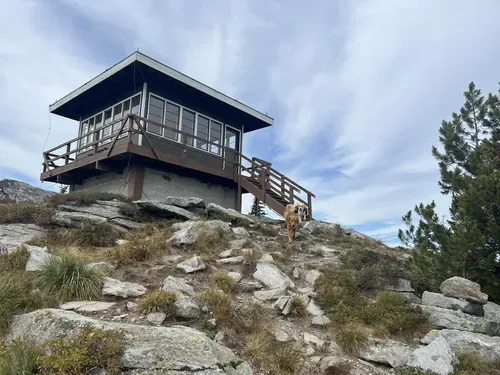 Photo: Porthill, Idaho, via images.alltrails.com
The trouble started with good intentions. City maintenance crews needed to patch some particularly stubborn potholes on Main Street, and like any responsible government workers, they filed the proper repair permits with both county and federal authorities. Standard procedure required detailed location coordinates for any infrastructure work near international boundaries.
That's when someone at the U.S. Geological Survey noticed something peculiar about those coordinates.
The Survey That Went Wrong
The original border survey between Idaho and British Columbia had been conducted in 1903 by a joint American-Canadian commission. Using the technology available at the time—primarily compass readings and chain measurements—the surveyors had marked what they believed was the 49th parallel, the official boundary established by treaty.
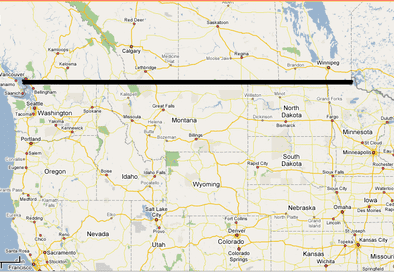 Photo: 49th parallel, via alchetron.com
 Photo: British Columbia, via cdn.pixabay.com
But early 20th-century surveying equipment wasn't perfect, especially in mountainous terrain where magnetic interference could throw off compass readings. The 1903 team had made a small but significant error, placing their boundary markers approximately 300 feet south of the actual 49th parallel.
For four decades, everyone simply assumed the markers were correct. Maps were drawn, property lines established, and taxes collected based on the surveyed boundary rather than the true international border.
Life in Legal Limbo
The implications were staggering. Three full city blocks of downtown Porthill, including the post office, two general stores, a gas station, and seventeen private homes, were technically located in Canada. The residents had been paying Idaho state taxes and voting in American elections while legally standing on foreign soil.
Even more bizarrely, the Canadian government had no idea these buildings existed. Their maps showed empty forest where Porthill's downtown actually stood. From Ottawa's perspective, a small American settlement had been quietly squatting on Canadian territory for nearly half a century.
The affected residents found themselves in an impossible situation. They couldn't legally be Canadian citizens because they'd never applied for immigration status. But their American citizenship was now questionable because their primary residences were outside U.S. territory.
Local business owner Margaret Henley discovered she'd been operating an "international" general store without any import licenses, customs declarations, or border crossing permits. Technically, every customer who walked through her door was making an illegal border crossing.
Diplomatic Damage Control
Once word reached Washington and Ottawa, both governments realized they had a delicate situation on their hands. The 1943 discovery came at the height of World War II, when American-Canadian cooperation was crucial to the war effort. Nobody wanted a border dispute between allies.
The State Department quietly opened negotiations with their Canadian counterparts, hoping to resolve the matter without publicity. The solution seemed obvious: simply move the official border to match the surveyed line that had been recognized for forty years.
But international law doesn't work that way. The 1818 treaty that established the 49th parallel as the boundary was specific about geographic coordinates, not survey markers. Changing the border would require a new treaty, which meant involving Congress and Parliament.
The Bureaucratic Maze
Meanwhile, the residents of downtown Porthill existed in bureaucratic purgatory. The Internal Revenue Service couldn't decide whether to continue collecting taxes from people who might not be American citizens. The postal service questioned whether delivering mail to the affected addresses constituted international mail service.
Local elections became particularly complicated. Idaho officials weren't sure if the affected residents could legally vote in American elections, while Canadian authorities pointed out that the residents weren't registered Canadian voters either.
The situation grew even more absurd when World War II draft boards tried to determine whether young men living in the disputed area were subject to American military service. The draft office in Coeur d'Alene sent letters to potential inductees, only to have the Canadian postal service return them as undeliverable to "foreign addresses."
Resolution and Reality
The diplomatic solution took three years to negotiate. In 1946, both countries signed a minor treaty adjustment that officially moved the international boundary to match the 1903 survey line. The residents of Porthill could finally stop worrying about their citizenship status.
But the incident revealed how thin the line can be between belonging somewhere and existing in legal limbo. For forty-three years, an entire community had lived their lives based on an assumption that turned out to be geographically incorrect.
The pothole that started it all was eventually fixed, but not before teaching everyone involved that sometimes the most routine paperwork can expose the most extraordinary problems. In a world where borders seem so permanent and official, the people of Porthill learned that reality is often more flexible than the maps suggest.
Today, a small plaque in downtown Porthill marks the spot where America's border briefly moved to accommodate a surveying mistake. It's a reminder that even national boundaries sometimes need to bend to match the messy realities of human geography.