The Soda Fountain Mistake That Built an Empire: How One Pharmacist's Bad Day Created America's Favorite Fizz
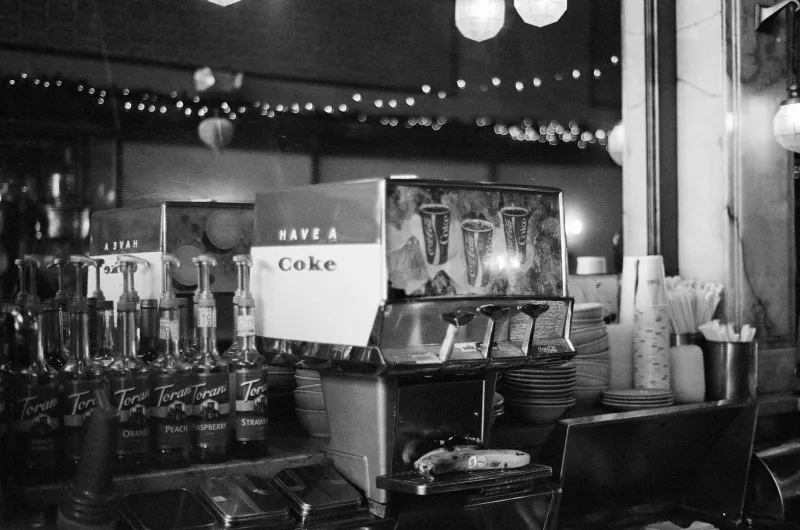
The Headache Cure That Became a Headache for Competitors
John Stith Pemberton had a problem. It was May 8, 1886, and the Atlanta pharmacist was desperately trying to create a patent medicine that would cure headaches, calm nerves, and maybe — if he was lucky — make him some money. What he got instead was one of the most expensive accidents in business history.
Pemberton had no idea that his clumsy mistake at a downtown Atlanta soda fountain would eventually become worth more than $240 billion and turn into the most recognizable brand on planet Earth.
A Pharmacist's Quest for the Perfect Tonic
Pemberton wasn't trying to create a soft drink. Like thousands of pharmacists across America in the 1880s, he was chasing the patent medicine boom — mixing herbs, extracts, and mysterious ingredients into tonics that promised to cure everything from indigestion to "nervous afflictions."
His latest experiment combined coca leaf extract (yes, from the same plant that produces cocaine, though in tiny, legal amounts), kola nut extract for caffeine, sugar, and a blend of oils including vanilla, lemon, orange, and cinnamon. The result was a thick, dark syrup that tasted medicinal at best and like cough medicine at worst.
Pemberton called it "Pemberton's French Wine Coca" and marketed it as a cure for morphine addiction, headaches, and impotence. Sales were predictably terrible.
The Day Everything Went Carbonated
The accident happened at Jacobs' Pharmacy, a popular soda fountain at the corner of Peachtree and Marietta Streets in downtown Atlanta. Pemberton had brought a jug of his headache syrup to mix with plain water for a customer who complained of feeling poorly.
But the pharmacy's soda jerk — the employee who mixed drinks at the fountain — grabbed the wrong lever. Instead of still water, he accidentally mixed Pemberton's syrup with carbonated water.
The customer took a sip, paused, and asked for another glass.
Pemberton, watching this interaction, realized he might have stumbled onto something bigger than a headache remedy. The carbonation didn't just make the drink more palatable — it transformed the medicinal syrup into something people might actually want to drink for pleasure.
From Medicine to Refreshment
Within weeks, Pemberton had pivoted from marketing his creation as medicine to selling it as a refreshing beverage. He dropped the wine from the formula (Atlanta had gone dry in 1886, making alcohol-based tonics problematic) and refined the recipe to emphasize taste over therapeutic claims.
His bookkeeper, Frank Robinson, suggested the name "Coca-Cola," thinking the two C's would look good in advertising. Robinson also penned the distinctive Spencerian script logo that, with minor modifications, is still used today.
The first advertisement for Coca-Cola appeared in The Atlanta Journal on May 29, 1886, describing it as "Delicious! Refreshing! Exhilarating! Invigorating!" — notably avoiding any medical claims.
The Accidental Genius of Carbonation
What Pemberton didn't realize was that carbonated water would do more than improve the taste of his syrup. The fizz created a sensory experience that made the drink feel special, almost celebratory. The bubbles carried the flavors more effectively to taste buds and created a cooling sensation that made the drink especially refreshing in Atlanta's sweltering heat.
Modern food scientists understand that carbonation enhances flavor perception and creates a mild acidic bite that balances sweetness. Pemberton stumbled onto these principles purely by accident.
The carbonation also solved a practical problem: it helped preserve the drink and gave it a longer shelf life than flat beverages, crucial in an era before reliable refrigeration.
The $2,300 Recipe That Became Priceless
Pemberton sold his first glass of Coca-Cola for five cents. In the first year, he sold only 25 gallons of syrup, earning roughly $50 against expenses of $70. By most measures, Coca-Cola was a commercial failure.
Pemberton, struggling with morphine addiction and mounting debts, began selling portions of his business to various partners. In 1888, just two years after the accidental invention, he sold his remaining stake in Coca-Cola to Asa Candler for $2,300.
Candler, a fellow Atlanta pharmacist with a better head for business, recognized what Pemberton had created. He aggressively marketed Coca-Cola, expanded distribution, and turned the accidental beverage into a national phenomenon.
The Mistake That Changed America
By 1895, Coca-Cola was being sold in every U.S. state. By 1900, it was available in Canada and Mexico. The accidental soft drink had become the foundation of an empire that would eventually span the globe.
Pemberton's clumsy moment at a soda fountain had inadvertently created America's first national beverage brand and helped establish the entire soft drink industry. His mistake sparked countless imitators and competitors, turning carbonated beverages into one of America's most successful exports.
The irony wasn't lost on observers: a pharmacist trying to cure headaches had instead created a drink that would give competitors headaches for more than a century.
The Lesson in Every Bubble
John Pemberton died in 1888, just two years after his accidental invention, never seeing Coca-Cola become a global phenomenon. He went to his grave thinking he had created a moderately successful patent medicine, not a cultural icon.
His story serves as a reminder that some of history's most important innovations came not from careful planning but from happy accidents, clumsy mistakes, and the wisdom to recognize opportunity when it fizzes up unexpectedly.
Today, every time someone opens a Coke, they're experiencing the results of a 19th-century pharmacy accident — proof that sometimes the best discoveries happen when everything goes wrong in exactly the right way.
The next time you're having a bad day at work, remember: John Pemberton's worst mistake became the world's most valuable accident. Sometimes the best thing that can happen is grabbing the wrong lever.