When Sunlight Became Property: The Desert Town That Tried to Copyright the Sky
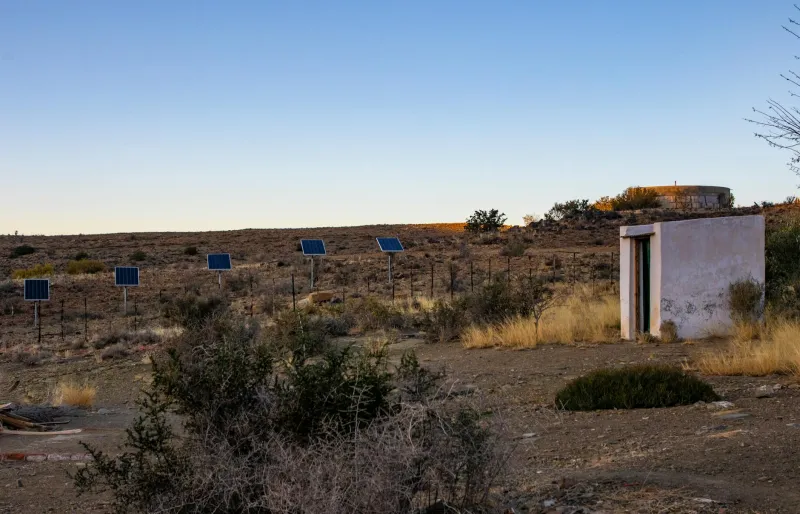
The Most Ridiculous Property Dispute in American History
Picture this: You wake up one morning, step outside, and discover your neighbor has filed a legal claim asserting they own all the sunlight hitting your yard. Sounds like the plot of a bad comedy movie, right? Well, in 1975, the residents of Desert Vista, Arizona, made this exact argument — and they were dead serious.
What started as a dispute over solar panels turned into the most bizarre property rights case in American legal history, forcing federal judges to grapple with a question nobody had ever thought to ask: Can you actually own sunlight?
When Solar Power Met Small-Town Politics
Desert Vista was your typical 1970s planned community — 847 residents scattered across 2,200 acres of scorching Arizona desert, complete with artificial lakes and the kind of ambitious master planning that only made sense during America's suburban boom. The community had been designed around "solar living," with every home positioned to maximize natural light and energy efficiency.
Everything was going smoothly until the Johnsons moved in next door to the community center and decided to install a massive solar array that cast shadows across the neighboring properties. The homeowners association politely asked them to relocate the panels. The Johnsons politely declined.
That's when Desert Vista's city council made a decision that would baffle legal scholars for decades: they voted to assert municipal ownership of all "reflected, concentrated, and ambient solar energy" within city limits.
The Legal Claim That Broke Everyone's Brain
On October 15, 1975, Desert Vista filed Federal Patent Application #74-891,432, requesting exclusive rights to sunlight within their municipal boundaries. Their argument was surprisingly sophisticated: since the community had invested millions in solar infrastructure and positioned every building to optimize solar collection, they had effectively "improved" the raw sunlight hitting their land, transforming it into a valuable municipal resource.
The application cited mining law precedents, arguing that solar energy was no different from extracting gold or copper from the earth. If a mining company could claim exclusive rights to minerals beneath their property, why couldn't a municipality claim rights to the energy flowing above it?
City Attorney Margaret Chen doubled down on the absurdity, arguing that Desert Vista's solar collectors had "enhanced and concentrated" natural sunlight, creating a proprietary energy product that deserved patent protection. She even submitted engineering reports showing how the community's reflective surfaces and solar arrays had increased local solar efficiency by 23%.
When Federal Judges Met Desert Logic
The U.S. Patent Office was not amused. In a scathing 47-page rejection letter, Patent Examiner Robert Hendricks pointed out that granting Desert Vista's claim would essentially give them ownership of a natural phenomenon that had existed for approximately 4.6 billion years before their community was incorporated.
But Desert Vista wasn't backing down. They appealed to federal court, arguing that their claim was limited to "artificially concentrated solar energy" created by their municipal infrastructure. The case landed on the desk of Judge Patricia Moorehouse, who later described it as "the most creative property dispute I've encountered in thirty years on the bench."
The hearings were pure theater. Desert Vista's lawyers brought in solar engineers, meteorologists, and even a physicist who testified about the "municipal enhancement of photonic energy collection." The federal government countered with constitutional scholars arguing that allowing municipalities to patent sunlight would violate the Commerce Clause.
The Verdict That Nobody Saw Coming
After six months of hearings, Judge Moorehouse delivered a split decision that satisfied absolutely no one. She ruled that while Desert Vista couldn't patent natural sunlight, they did have legitimate property rights to "artificially enhanced solar energy" created by their municipal infrastructure.
However, she limited these rights to energy collected within their existing solar arrays, effectively giving them ownership of sunlight only after it had been captured by their equipment. It was like ruling that you could own water, but only after it had fallen into your bucket.
The decision created a legal precedent that nobody knew what to do with. Desert Vista had won the right to own sunlight — but only sunlight they had already captured, which was pretty much meaningless.
The Legacy of America's Strangest Property Case
Desert Vista's solar empire lasted exactly 18 months. In 1977, the Arizona State Legislature passed emergency legislation clarifying that municipalities could not claim ownership of "natural phenomena occurring within their boundaries," effectively overturning Judge Moorehouse's decision.
But the case had exposed a genuine gap in American property law. Solar rights remain a contentious issue across the Southwest, where homeowners regularly battle over shade, solar access, and energy collection rights. Several states have since passed "solar easement" laws directly inspired by Desert Vista's failed power grab.
The most ironic twist? Desert Vista's solar infrastructure was so successful that the community became energy-independent by 1978, generating enough power to sell excess electricity back to the grid. They never needed to own the sun — they just needed to harness it.
Why This Story Still Matters
Today, as solar power becomes increasingly mainstream, Desert Vista's bizarre legal gambit looks almost prophetic. Property disputes over solar access, energy storage rights, and municipal power generation are becoming common across America. The fundamental question they raised — who owns renewable energy? — remains surprisingly relevant.
Desert Vista proved that in America, you can try to patent almost anything, even sunlight. Whether you succeed is another matter entirely, but the attempt alone can reshape how we think about property, energy, and the increasingly blurry line between natural resources and human innovation.
Sometimes the most ridiculous legal cases reveal the most serious gaps in our laws. And sometimes, a small desert town's quest to own the sun ends up illuminating problems nobody realized existed.