The US Air Force Declared War on an Eight-Inch Bird — and the Bird Didn't Blink

Photo: Tomás Del Coro from Fabulous Las Vegas, Nevada, USA, CC BY-SA 4.0, via Wikimedia Commons
The Enemy Was Eight Inches Tall
Eglin Air Force Base sits on roughly 460,000 acres of northwest Florida panhandle, making it the largest air force base in the United States. It has tested some of the most sophisticated weapons in American military history. It houses squadrons of aircraft that represent billions of dollars in defense investment.
In the mid-1990s, it was getting absolutely humiliated by a woodpecker.
The red-cockaded woodpecker — a black-and-white bird roughly eight inches long, with a barely-visible red streak on the male's head — had been pecking neat, round holes into the wooden structures on base. Not the aircraft themselves, thankfully, but the support infrastructure: wooden utility poles, the frames of older buildings, and critically, the support structures of aircraft hangars.
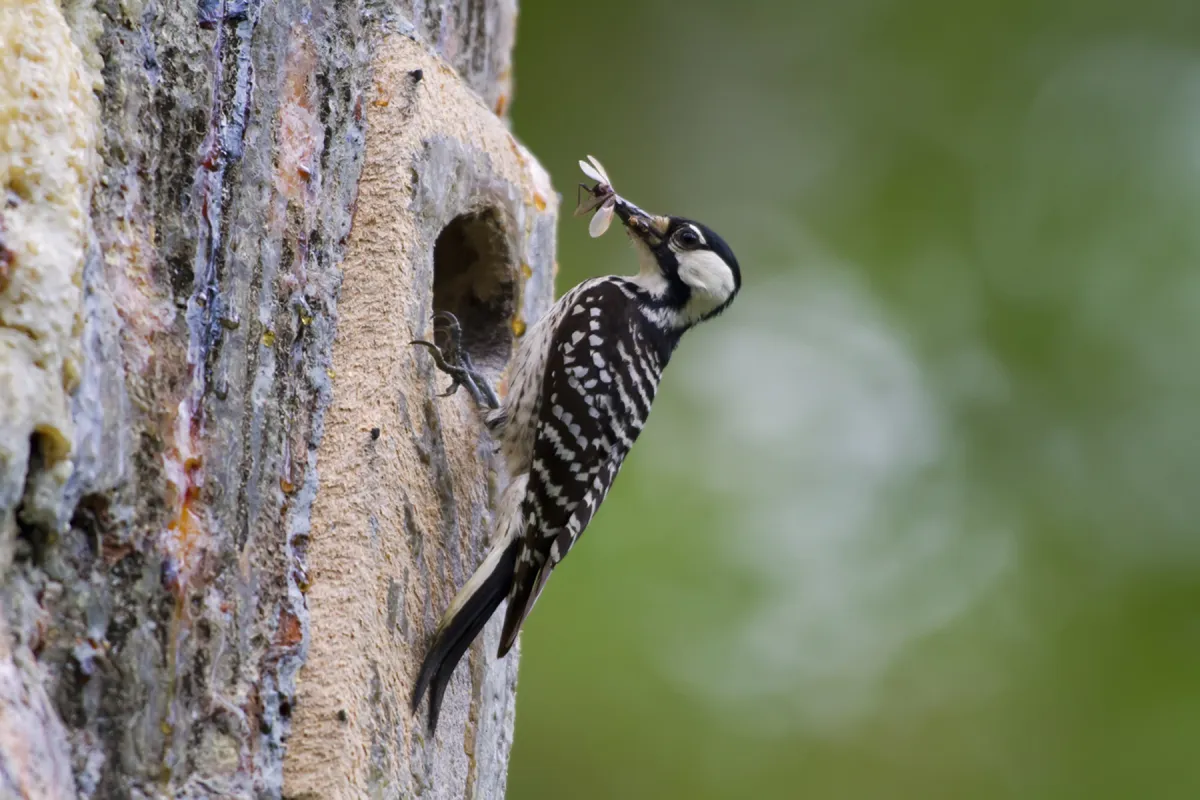 Photo: red-cockaded woodpecker, via nas-national-prod.s3.amazonaws.com
The Air Force wanted the birds gone. There was just one significant problem.
The red-cockaded woodpecker had been listed as an endangered species under the Endangered Species Act since 1970. Harming one — or even significantly disrupting its habitat — was a federal crime. The same federal government that operated Eglin Air Force Base had also made it illegal to mess with the birds living on Eglin Air Force Base.
The US military had been legally outgunned by something that weighs less than two ounces.
A Bureaucratic Standoff for the Ages
The Endangered Species Act doesn't have a "but they're annoying" exception. It doesn't have a "national security" carve-out for woodpeckers drilling into hangar supports. The law is, in this respect, impressively indifferent to rank.
To take any action that might harm the birds or disturb their nesting cavities, the Air Force needed to go through the US Fish and Wildlife Service. Every proposed solution required review. Every deterrent had to be evaluated for whether it might constitute "harassment" of a protected species under the law's definitions.
The birds, operating without legal counsel, simply kept drilling.
Red-cockaded woodpeckers are unusual among their kind in one important respect: they exclusively excavate their nesting cavities in living pine trees, a process that can take years. But they will also use pre-existing cavities in wooden structures if available — and Eglin's older infrastructure, set among longleaf pine habitat, was apparently quite appealing.
Air Force personnel reportedly tried a range of deterrents. Loud noises. Visual deterrents. Various forms of discouragement that stopped carefully short of anything that might trigger a federal wildlife violation. The birds, demonstrating the kind of commitment the Air Force actually admires in other contexts, were not deterred.
The Lawyers Enter the Nesting Cavity
What followed was a years-long negotiation between military brass and wildlife regulators that reads like a Kafka novel set in Florida.
The Fish and Wildlife Service wasn't unsympathetic to the Air Force's situation — they understood that a military installation had legitimate operational needs. But the law was the law, and the red-cockaded woodpecker's population had declined so severely from logging and habitat loss that regulators weren't in a position to start making informal exceptions for convenience.
The eventual resolution involved something almost poetic in its bureaucratic creativity: the Air Force agreed to become active participants in red-cockaded woodpecker conservation on its own land. Rather than fighting the birds, Eglin would manage its vast longleaf pine acreage to actively support the species — controlled burns to maintain habitat, installation of artificial nesting cavities to encourage the birds toward trees and away from structures, population monitoring, the works.
Eglin Air Force Base, the largest in the country, became one of the most significant red-cockaded woodpecker conservation sites in the southeastern United States.
The birds, for their part, accepted these terms without comment.
What the Birds Actually Won
This isn't just a funny story about bureaucratic absurdity, though it is absolutely that. It's also a genuine case study in how the Endangered Species Act was designed to work — and occasionally does.
The red-cockaded woodpecker's population at Eglin grew significantly following the conservation agreement. The Air Force, having been legally cornered into stewardship, turned out to be a reasonably effective wildlife manager once it committed to the role. The longleaf pine ecosystem on base — one of the most threatened forest types in North America — benefited from management practices that the military adopted specifically to comply with wildlife law.
The hangars got repaired. The birds got a conservation program. The Fish and Wildlife Service got a cooperative partner it hadn't expected. Everyone, more or less, got something out of it.
Except the original plan, which was to make the woodpeckers someone else's problem. That plan lost.
It lost to a bird that weighs less than a deck of cards, has no concept of federal law, and was simply doing what woodpeckers do.
Sometimes the most remarkable thing about a standoff is who was never actually trying to win.