Her Brain Rewired Overnight and She Woke Up Speaking a Language Nobody Recognized
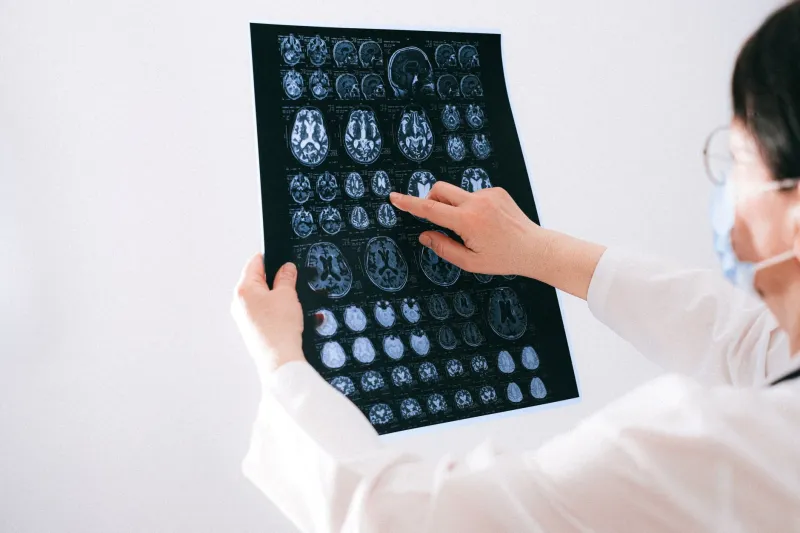
She Went to Bed Speaking Normally. She Woke Up Speaking Nothing at All.
In 1884, a woman admitted to a Philadelphia hospital had been perfectly coherent three days earlier. She'd been having a pleasant conversation with her sister about Sunday dinner when she stopped mid-sentence, stared at the wall, and started producing sounds that her family could only describe as "words from nowhere." She wasn't screaming. She wasn't distressed. She was speaking — clearly, confidently, at a normal conversational pace — in something that sounded almost like language but wasn't any language anyone in that room had ever heard.
Her doctors wrote her off as hysterical. A priest was called. Nobody thought to look at her brain.
That story isn't unique. Versions of it appear in medical records stretching back hundreds of years, scattered across different countries and different centuries, all describing the same terrifying thing: a person who was previously healthy suddenly producing streams of unintelligible sound — not random noise, but something that had rhythm, cadence, and the unmistakable structure of speech. Just without any meaning anyone could decode.
For a very long time, the explanation was simple: God, or the devil, depending on who you asked.
The Medical Community Had a Word for It. That Didn't Mean They Understood It.
The term glossolalia has been around since at least the first century AD, originally used to describe the Biblical phenomenon of "speaking in tongues." For most of recorded history, that's exactly where the conversation stopped. Whether the speaker was considered blessed or cursed depended largely on the era and the local clergy. Either way, it wasn't a medical problem. It was a spiritual one.
The trouble with that framing became apparent as soon as doctors started paying closer attention. Because some of these people weren't having religious experiences. They were having strokes.
In the late 1800s, neurologists — a profession that was itself barely a generation old — began noticing patterns. Patients who suffered damage to specific regions of the left hemisphere of the brain sometimes lost the ability to produce coherent language, but didn't lose the impulse to speak. They kept talking. Their mouths kept moving, their voices kept rising and falling with what sounded like emotional intent. But the words were gone, replaced by invented syllables, repeated fragments, or sounds that hovered just at the edge of meaning without ever arriving there.
This condition got its own name: jargon aphasia. And it turned out to be one of the most disorienting neurological events a human being could experience — both for the person having it and everyone watching.
The Brain Doesn't Know It's Broken
Here's the part that really gets under your skin: in many documented cases, the patients had no idea anything was wrong.
Because the damage that causes jargon aphasia often affects the same brain region responsible for monitoring your own speech output, patients lose the ability to hear themselves the way others hear them. They believe they're communicating normally. They get frustrated when nobody responds appropriately. Some become agitated, convinced that everyone around them is being deliberately obtuse.
One 1970s case study described a man who had suffered a left temporal lobe stroke and spent three days attempting to give his medical team what he clearly believed were detailed instructions about his care. His speech was fluid, emotionally expressive, and completely incomprehensible. When a nurse gently tried to redirect him, he grew indignant. He thought she was being difficult.
The brain, it turns out, is shockingly bad at recognizing its own failures. The mechanism that's supposed to catch the error is the same one that got damaged. It's like asking a broken smoke detector to tell you whether it's working.
When Religion and Neurology Collide
The overlap between genuine neurological events and religious experience has made this topic particularly complicated — and occasionally explosive — for researchers.
In the 1970s, a group of researchers began studying the brain activity of people who practiced glossolalia voluntarily as part of Pentecostal Christian worship. What they found was genuinely strange: the brain patterns during religious glossolalia were different from those seen during jargon aphasia. Voluntary glossolalia showed reduced activity in the frontal lobes — the areas associated with intentional language production — suggesting that practitioners were, in some measurable sense, genuinely relinquishing conscious control of their speech.
That doesn't make it supernatural. But it does mean the brain is doing something unusual. Something it doesn't normally do. And that distinction — between I am choosing to do this and this is happening to me — is exactly the line that centuries of physicians failed to draw.
What We Actually Know Now
Modern neuroimaging has given researchers a level of clarity that earlier doctors could only dream of. We now know that coherent language production involves a complex, distributed network of brain regions — Broca's area, Wernicke's area, the arcuate fasciculus connecting them — and that damage to almost any point in that network can produce radically different and deeply strange results.
Some stroke patients lose nouns but keep verbs. Some lose the ability to speak but can still write. Some can sing lyrics they can no longer say. And some produce fluent, confident, completely meaningless streams of sound while being entirely unaware that anything has changed.
The cases that haunted physicians for centuries weren't possessions. They weren't miracles or curses. They were the brain doing its best to keep functioning after part of its operating system had been quietly, catastrophically switched off.
Which is, depending on your perspective, either more comforting or more terrifying than the alternative.