One Street, Two States, Two Hundred Years of Bureaucratic Chaos
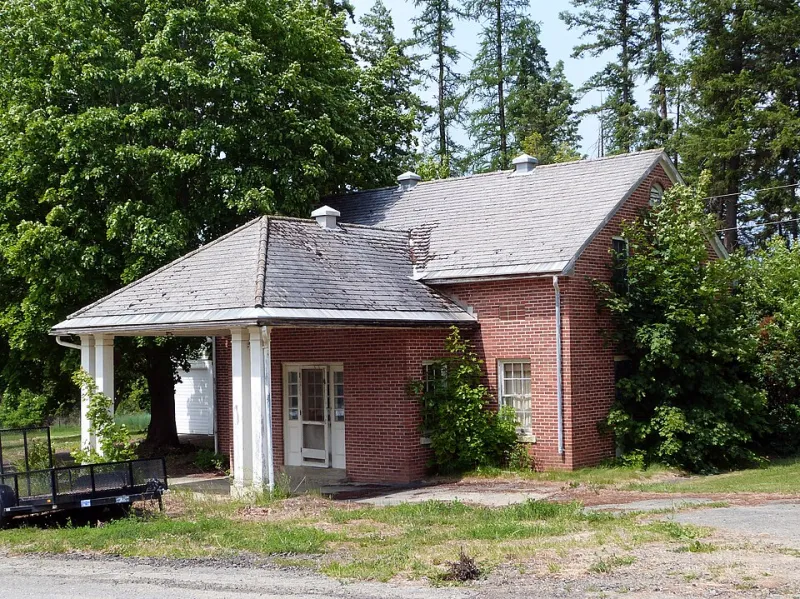
Photo: Ian Poellet, CC BY-SA 4.0, via Wikimedia Commons
The Surveyor Who Started It All
Sometime in the years after the American Revolution, when the new United States was still sorting out where one state ended and another began, a surveyor made a mistake. Not a dramatic, catastrophic mistake — just the kind of quiet, technical error that looks totally fine on paper until you realize, about two hundred years later, that an entire town has been living inside a legal impossibility.
The result was a small border community that existed, simultaneously and officially, inside two different states. Not straddling a line — actually claimed by both. Which sounds like a quirky footnote until you consider what that actually meant for the people who lived there.
Double Everything, Except the Fun
Imagine waking up one morning and discovering that your house is in State A, but your neighbor's house — thirty feet away — is in State B. Now imagine that both states know this, both states want their tax money, and neither state is willing to just... let it go.
That was daily life for residents of this border community for generations. They didn't just pay property taxes once. They paid twice — once to each state, because each state had paperwork insisting the land was theirs. Challenging either bill was essentially pointless, because both states had legal standing to make the claim, and neither had any incentive to voluntarily surrender the revenue.
The licensing situation was somehow even more absurd. Because state lines determined which laws applied to which roads, a person driving from one end of their own street to the other could technically cross a jurisdictional boundary mid-block. That meant certain licenses, vehicle registrations, or business permits valid on one side of the street were not recognized on the other. For anyone running a small business — a shop, a tavern, a trade — this created a compliance nightmare that required maintaining relationships with two separate sets of state regulators who frequently disagreed with each other.
When the Laws Themselves Contradict Each Other
Here's where it gets genuinely surreal. Because the two states had developed independently, their legal codes diverged over time in ways large and small. Marriage laws differed. Inheritance rules differed. Property transfer procedures differed. This meant that a contract perfectly legal under one state's law could be unenforceable under the other's — even if both parties lived within shouting distance of each other.
Courts in both states occasionally issued rulings that applied to the same piece of land, producing contradictory legal outcomes that neither state's judiciary could fully override. Lawyers who practiced in the area essentially had to become fluent in two entirely separate bodies of law just to serve clients who, in most of the country, would have been completely ordinary cases.
For the residents themselves, the confusion was less an abstract legal puzzle and more a grinding, generational inconvenience. You learned which rules applied where the same way you learned anything in a small town — from your parents, who learned it from theirs, who had long since stopped being surprised by any of it.
Why Nobody Fixed It
The obvious question is: why did this take two hundred years to resolve?
The answer, frustratingly, is that fixing it required both states to agree on where the real line was — and that meant one state had to formally give something up. Even if what it was giving up was a jurisdictional headache it never wanted in the first place, governments are not historically great at voluntarily surrendering territory, symbolic or otherwise. Every time the issue surfaced politically, it ran into the same wall: the process of resolution was more politically complicated than simply leaving things alone.
There were also residents on both sides who had organized their legal affairs — deeds, wills, business licenses — around whichever state's claim benefited them most. A clean resolution would inevitably inconvenience someone who had built their life around the ambiguity.
The Anticlimactic Resolution
When the fix finally came, it arrived not through dramatic legislation or a Supreme Court ruling, but through the kind of administrative process so boring it barely made local news. A joint boundary commission — the sort of body that meets in conference rooms and argues about GPS coordinates — issued an updated survey using modern technology, both state legislatures ratified the new line in routine sessions, and that was essentially it.
No ceremony. No acknowledgment of the two centuries of confusion that preceded the moment. Just updated maps, new deed records, and a quiet bureaucratic exhale.
The Jolt
What makes this story remarkable isn't the surveying error itself — mistakes happen, especially when you're trying to draw borders across an entire continent with 18th-century tools. What's remarkable is the two-hundred-year shrug that followed. Generation after generation of lawmakers, judges, and regulators looked at the situation, recognized it as absurd, and collectively decided that dealing with it was someone else's problem.
The residents of that border community didn't get to make that choice. They just lived in it — paying two tax bills, obeying two sets of laws, and crossing invisible jurisdictional lines on their way to get the mail. Reality, as it turns out, doesn't wait for paperwork to catch up.