He Was the Only Doctor for a Thousand Miles — So He Cut Himself Open and Saved His Own Life
There's a particular kind of dread that comes with being sick and completely alone. Now imagine you're a doctor. You know exactly what's wrong with you. You know exactly what needs to happen to fix it. And you also know that you are the only person on the planet who can do it.
That was Leonid Rogozov's situation in the spring of 1961, and what he did next is the kind of story that sounds like it was invented for a movie — except it wasn't.
The End of the Earth, Literally
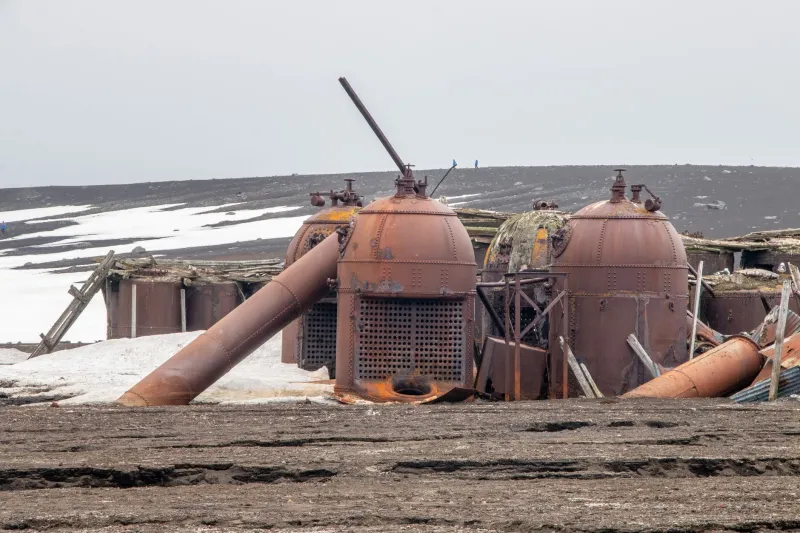
Rogozov was a 27-year-old Soviet surgeon assigned to the Novolazarevskaya research station in Antarctica, one of the most isolated human outposts ever established. The base sat deep in the interior of the continent, accessible by sea only during a narrow window of Antarctic summer. The rest of the year, it was cut off entirely — no flights in, no ships through the ice, no way out.
The team of twelve was there for science. Rogozov was there to keep everyone alive if something went wrong. He was the only physician for roughly a thousand miles in any direction.
On April 29, 1961, something went wrong with Rogozov himself.
He woke up feeling off. Mild nausea, a low fever, a dull ache in his lower right abdomen. He knew those symptoms the way you know your own name. Acute appendicitis. His appendix was inflamed and, if left untreated, would rupture — flooding his abdominal cavity with infection and killing him within days.
He radioed for advice. Moscow confirmed what he already knew: there was no way to evacuate him in time. The Antarctic weather made any flight attempt a death sentence for the rescue crew as well. The answer, delivered across thousands of miles of static, was essentially: you're on your own.
The Plan Nobody Should Ever Have to Make
Rogozov spent two days getting sicker, hoping it might resolve on its own — some cases of appendicitis do. His didn't. By May 1, his temperature was climbing, the pain was sharpening, and he understood with clinical clarity that he was running out of time.
So he made a decision that every surgeon alive would recognize as technically insane and yet completely rational: he would perform his own appendectomy.
He gathered his instruments, briefed two of his colleagues — a meteorologist and a driver — on how to hand him tools and hold a mirror so he could see what he was doing. Neither had any medical background whatsoever. One of them reportedly had to step away during the procedure because he felt faint.
Rogozov positioned himself semi-reclined, administered a local anesthetic to his own abdomen, and began to cut.
He worked without gloves for part of the procedure because the gloves made it too difficult to feel what he was doing. He worked mostly by touch when the mirror angle made visibility impossible. At one point, his blood pressure dropped and he nearly lost consciousness. He paused, waited for the feeling to pass, and kept going.
The operation lasted approximately one hour and forty-five minutes. He successfully removed his appendix — which had already begun to show early signs of rupture — closed the incision, and then, by his own account, simply lay back and rested.
Two weeks later, he was back at work.
What This Actually Means
It's worth slowing down here, because the facts are easy to gloss over.
Performing an appendectomy on another person is already a delicate operation. The appendix sits in a specific corner of the lower abdomen, and accessing it requires precise incision, careful maneuvering around surrounding tissue, and good visibility. Surgeons train for years to do it well.
Rogozov did it on himself. At an angle no surgical textbook has ever recommended. With improvised assistance from people who had no idea what they were looking at. In a research hut at the bottom of the world.
The medical community, when the story eventually circulated in the West, was divided between awe and disbelief. Some surgeons pointed out the sheer technical difficulty of operating on your own abdomen — the muscles naturally tense when you try to cut them, the angle of vision is wrong, the reach is awkward. Others simply noted that he had no other option and apparently executed it anyway.
Rogozov himself was characteristically understated about the whole thing. In his diary, he described the procedure in calm, clinical language — noting when he felt faint, when visibility was poor, when he had to slow down. He wrote that he tried not to think about the fact that he was his own patient. He just focused on the surgery.
The Quiet Aftermath
Rogozov completed his Antarctic posting and returned to the Soviet Union, where he continued to practice medicine for decades. He became a respected surgeon and teacher in St. Petersburg. He rarely talked publicly about what happened in Antarctica. When he did, he tended to frame it simply: there was a problem, and he solved it.
He died in 2000 at the age of 66. His son, also a physician, later published his father's diary entries from that period — and the matter-of-fact tone of the writing is somehow more remarkable than any dramatic retelling could be.
The story has since become a kind of legend in medical circles, occasionally surfacing in surgical training discussions as an extreme illustration of adaptability under pressure. It's also cited in research on human performance in isolated environments — the kind of thing NASA and other space agencies pay close attention to as they plan for long-duration missions where medical evacuation simply won't be an option.
Because here's the thing that makes Rogozov's story more than just a dramatic footnote: the problem he faced in 1961 isn't going away. Astronauts heading to Mars will face the same equation. Remote researchers still do. The question of what a person can do when there is genuinely no one else to help is one that medicine keeps having to revisit.
Rogozov's answer, delivered with a scalpel and a mirror on a frozen continent, remains the most extreme on record.