The Submarine That Vanished While the Navy Pretended Nothing Happened
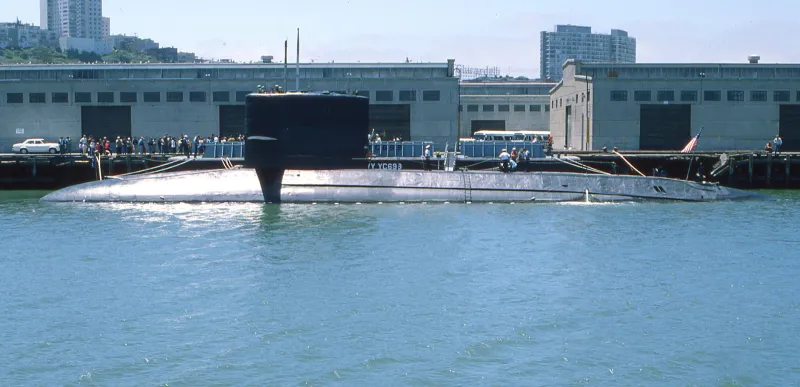
The Homecoming That Never Came
On May 27, 1968, families gathered at Norfolk Naval Base to welcome home the USS Scorpion from a routine Mediterranean deployment. The submarine was scheduled to arrive at 1 PM. By evening, the dock remained empty, but Navy officials assured worried families that delays were common and nothing was wrong.
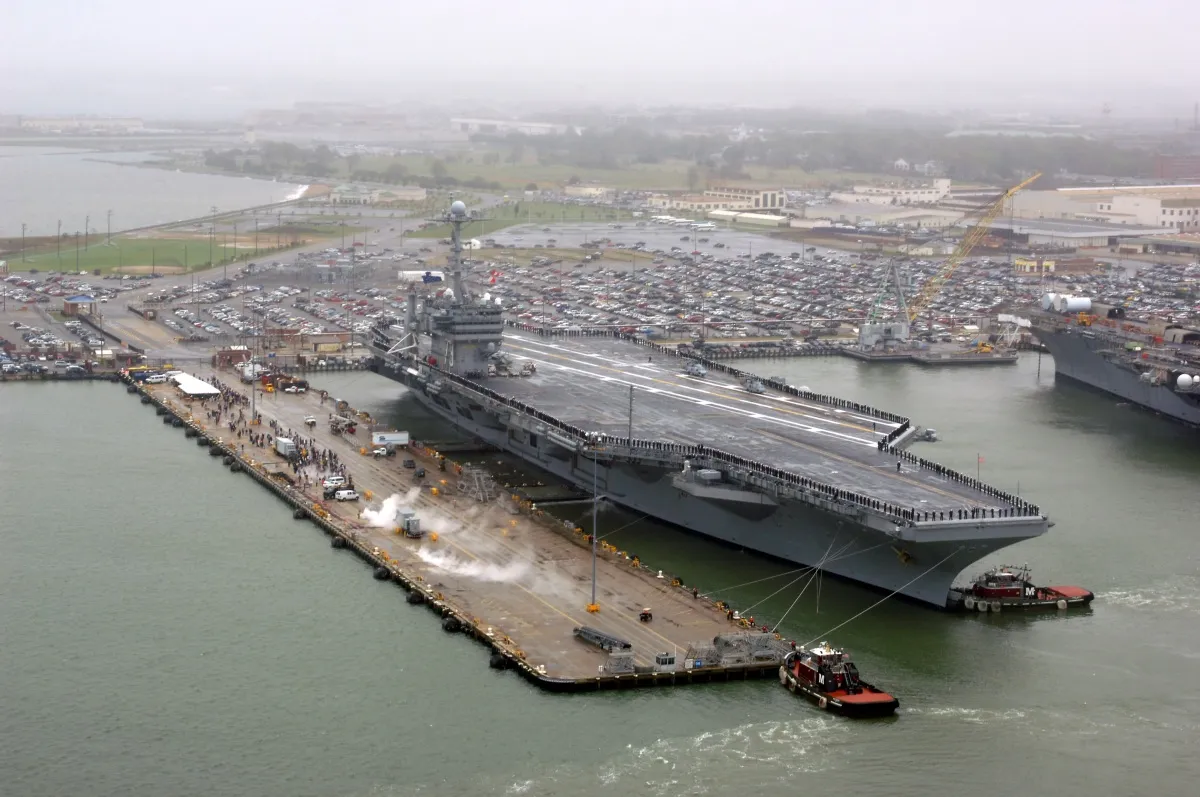 Photo: Norfolk Naval Base, via megaconstrucciones.net
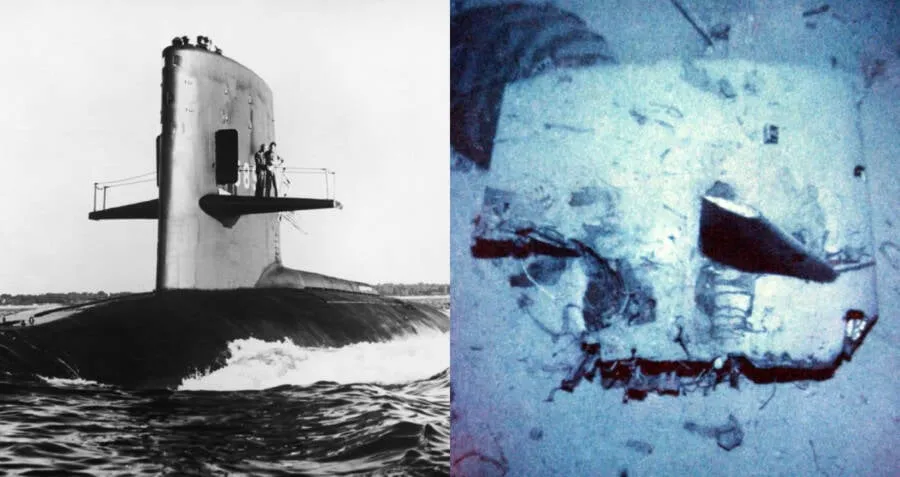 Photo: USS Scorpion, via allthatsinteresting.com
For weeks, this became the official story: the Scorpion was fine, just running late. Meanwhile, the Navy was secretly mobilizing one of the largest underwater search operations in military history. The submarine had vanished 400 miles southwest of the Azores, taking 99 men to the bottom of the Atlantic.
The Silence That Spoke Volumes
What made the Scorpion's loss extraordinary wasn't the tragedy itself—submarines had been lost before. It was the elaborate fiction the Navy maintained while families waited for news that would never come.
Commanders knew something was catastrophically wrong within days of the Scorpion's last radio transmission on May 21. But admitting a nuclear submarine had disappeared meant acknowledging that the Navy had lost track of a vessel carrying nuclear torpedoes in the middle of the Cold War.
So they said nothing and searched everything.
The Secret Hunt
While publicly maintaining that the Scorpion was simply overdue, the Navy deployed every available asset to find the missing submarine. Research vessels, deep-sea cameras, and experimental sonar systems scoured thousands of square miles of ocean floor.
The search involved classified technology that couldn't be acknowledged publicly. The Navy was using the same underwater detection systems it employed to track Soviet submarines—capabilities they couldn't reveal without compromising national security.
Families received visits from Navy chaplains offering vague reassurances, not knowing that miles overhead, ships were dragging the ocean with cameras looking for wreckage.
The Impossible Physics
The Scorpion had imploded at a depth of 11,000 feet, where water pressure exceeds 5,000 pounds per square inch. The submarine was crushed in milliseconds, faster than human nerves could register pain. But this clinical reality couldn't be shared with families still hoping for rescue.
Navy investigators eventually determined that a torpedo had likely malfunctioned, detonating inside the submarine and causing catastrophic flooding. The Scorpion had essentially been destroyed by its own weapon—a mechanical betrayal that seemed too cruel to be random.
The Cover-Up That Protected Nothing
The Navy's insistence that nothing unusual had occurred protected no one and fooled no one who mattered. Soviet intelligence knew American submarines operated in the Atlantic and would have noticed the massive search operation. The only people kept in the dark were American families and taxpayers.
The deception created a surreal situation where official truth and actual truth existed in parallel universes. Navy wives attended support group meetings while their husbands' ship was already a debris field on the ocean floor.
When Reality Finally Surfaced
On June 5, 1968—nine days after the scheduled homecoming—the Navy finally announced that the Scorpion was "overdue and presumed lost." Even then, they revealed nothing about the search operation that had been underway for weeks.
The wreckage wasn't officially located until October, though the Navy had likely found it much earlier. When photographers finally captured images of the crushed hull, the pictures were classified for decades. Families learned their loved ones' fate through newspaper reports, not official notification.
The Questions That Remain
Decades later, the Scorpion's loss remains partially classified. The Navy has released thousands of pages of documents, but key details about the submarine's final mission and the cause of its destruction are still redacted.
Some investigators believe the Scorpion was conducting surveillance on Soviet naval activities when it was lost. Others suggest the submarine was testing new weapons systems that malfunctioned catastrophically. The truth remains buried in classified files and 11,000 feet of seawater.
The Human Cost of Official Silence
For the families who waited on that Norfolk dock in May 1968, the Navy's deception added psychological torture to overwhelming grief. They spent weeks oscillating between hope and despair while officials who knew the truth offered false comfort.
The Scorpion incident revealed how national security considerations can transform personal tragedy into state secret. Ninety-nine men died in service to their country, but their deaths became a classified matter that couldn't be publicly acknowledged or properly grieved.
The Legacy Under Water
The USS Scorpion still rests on the Atlantic floor, her hull crushed but her nuclear reactor safely contained. The Navy monitors the wreck site for radiation leaks, but the submarine poses no environmental threat after more than 50 years underwater.
What remains dangerous is the precedent the Scorpion's loss established: that military institutions can disappear their own people and maintain plausible deniability for weeks while families suffer in ignorance.
The Truth That Surfaced Too Late
The Scorpion's story proves that in the modern world, people can vanish completely while bureaucracies pretend they never existed. For nearly two weeks in 1968, 99 American sailors were simultaneously dead and officially fine—a quantum state of denial that protected nothing except institutional embarrassment.
The submarine that shouldn't exist in official records remains one of the Cold War's most haunting examples of how truth becomes the first casualty of secrecy, even when the only enemy is time and the only battle is against admitting failure.
Sometimes the most unbelievable coincidence is that reality and official truth can exist in the same universe without ever touching.