Five Million People Died and History Basically Forgot to Write It Down
Photo: Jan Baptist Weenix, Public domain, via Wikimedia Commons
The Soldiers Came Home Sick
It started, as so many Roman catastrophes did, at the edge of the empire.
In 165 AD, Roman legions returning from a campaign in the Near East brought something back with them that no military briefing had anticipated. Within months, a disease was spreading through the empire's population — moving along trade routes, through army camps, into cities, and across the provinces with a speed that the ancient world had almost no framework to understand.
The physician Galen, arguably the most important medical mind of the ancient world, documented what he saw: fever, diarrhea, skin eruptions. Modern researchers who have studied his descriptions believe, with reasonable confidence, that the Antonine Plague — named for the ruling Antonine dynasty — was likely smallpox, or something closely related to it, hitting a population with no prior exposure and therefore no immunity whatsoever.
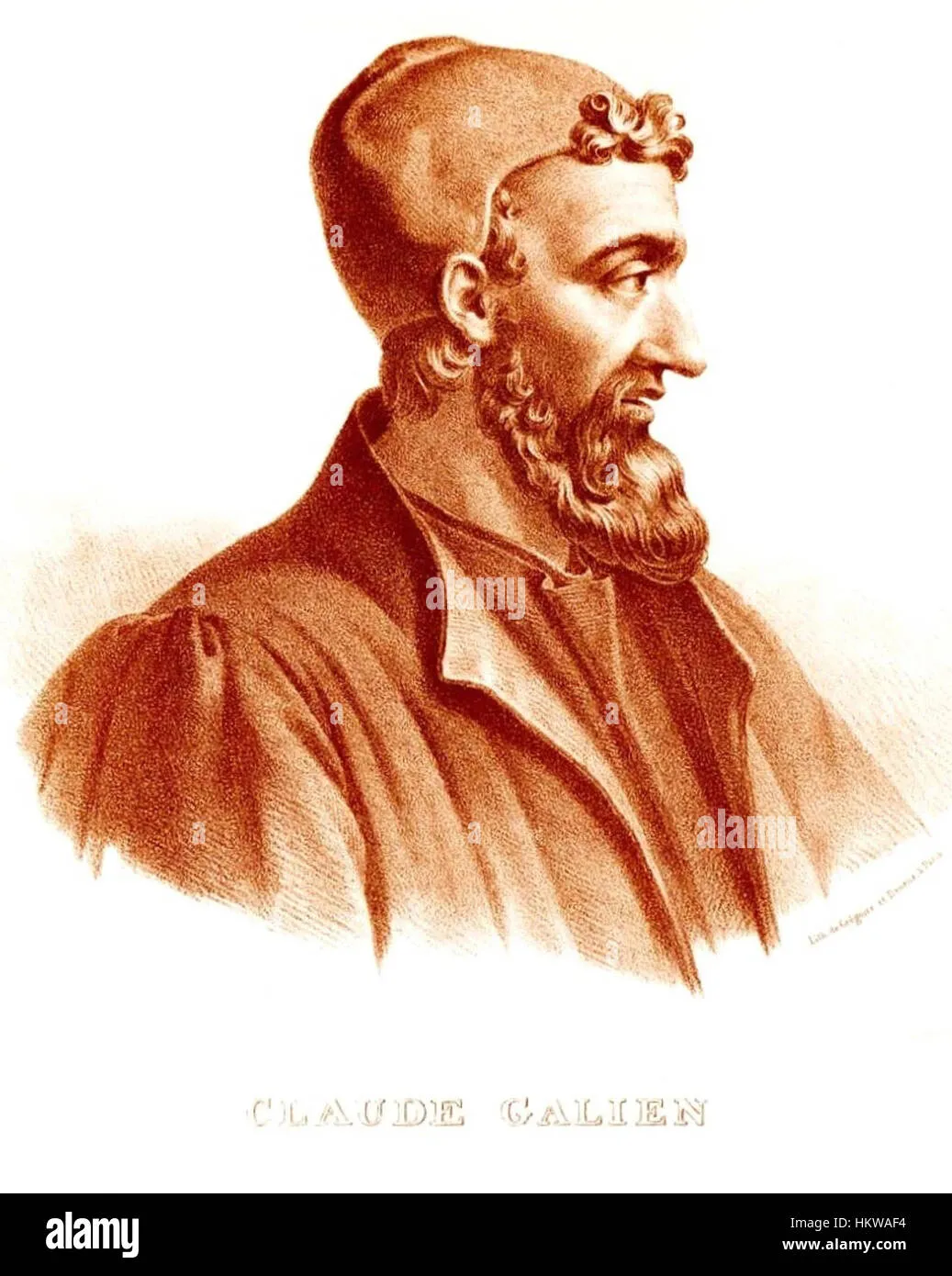 Photo: Galen, via c8.alamy.com
Over the next fifteen to twenty years, the death toll climbed. Estimates vary, because ancient record-keeping was not exactly the CDC, but credible modern scholarship puts the total somewhere between two and five million dead. Some researchers push higher. At the peak, ancient sources describe up to 2,000 deaths per day in Rome alone.
For context: the city of Rome at that time had a population somewhere in the range of one million people.
An Empire Quietly Breaking
The effects were not subtle. The Roman legions, which had maintained the empire's borders through a combination of discipline and sheer manpower, were suddenly short of men. Marcus Aurelius — yes, the philosopher-emperor, the one whose Meditations still sells well in airport bookstores — was forced to recruit gladiators and slaves into the military to fill gaps the plague had carved into the ranks. Germanic tribes pressing on the northern frontier found Roman resistance thinner than it should have been.
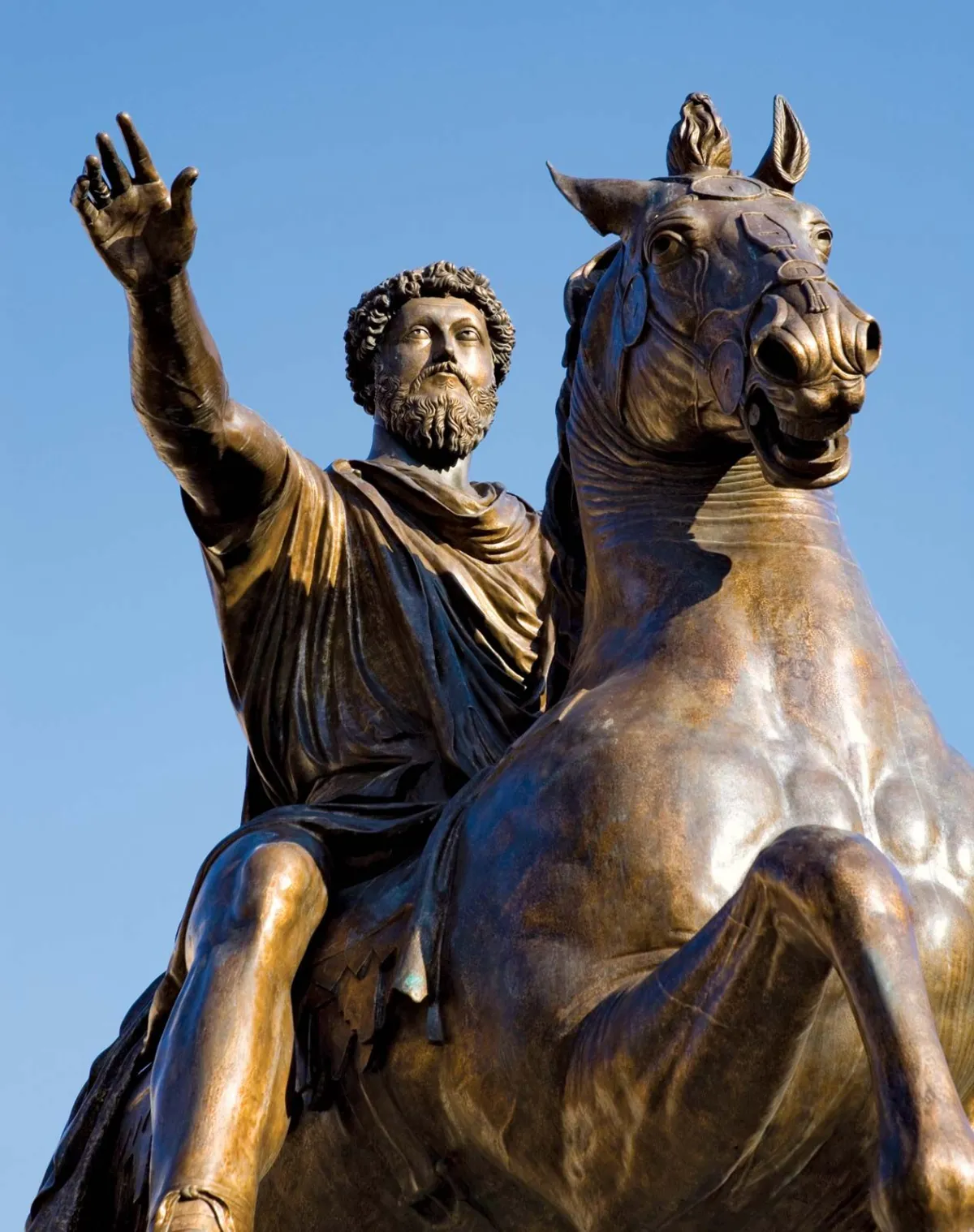 Photo: Marcus Aurelius, via cdn.britannica.com
The agricultural workforce shrank. Tax revenues dropped. The economic machinery of an empire that ran on human labor and human consumption started grinding in ways it hadn't before.
And then there was religion. The Antonine Plague struck during a period when a small, frequently persecuted religious movement was making its way through the Roman world. Christians, who had a theological framework that encouraged caring for the sick and a belief system that treated death as something other than pure catastrophe, reportedly stayed in plague-affected areas when others fled. They nursed the sick. They buried the dead.
Some historians have argued — carefully, because this is genuinely contested territory — that the plague created social conditions that accelerated the spread of Christianity through the empire. People who survived because someone stayed to care for them remembered who stayed.
A pandemic may have nudged the religious history of Western civilization.
So Why Did History Forget?
Here's the part that genuinely defies easy explanation.
The Black Death of the 14th century killed a comparable percentage of Europe's population and generated an almost overwhelming volume of historical documentation — art, literature, legal records, religious writing, first-person accounts. It is one of the most studied events in medieval history.
The Antonine Plague, which may have been equally catastrophic in absolute terms for its time and place, left a much thinner trail. Galen wrote about it. A handful of other ancient sources mention it. But for roughly 1,500 years after the fact, it received almost no sustained historical attention. It wasn't a secret, exactly — the references were sitting in ancient texts the whole time — but it wasn't treated as a world-historical event of the first order either.
Several things likely contributed to this strange amnesia.
First, the Romans themselves had limited tools for understanding what was happening. Disease in the ancient world was often attributed to divine displeasure, bad air, or cosmic imbalance. There was no epidemiological tradition that would prompt someone to sit down and document transmission patterns and mortality rates the way a modern public health official would.
Second, the empire didn't collapse immediately. The Antonine Plague weakened Rome, but Rome kept going for another three centuries. Civilizations that survive catastrophe sometimes absorb it into the background noise of history rather than memorializing it as a turning point.
Third — and this is perhaps the most unsettling explanation — history has always been selective in ways that reflect the interests and blind spots of whoever is doing the writing. Military campaigns got recorded. Political transitions got recorded. Plagues that killed farmers and soldiers and anonymous urban poor, without a clean narrative arc or a single dramatic moment to anchor the story, were easier to let slide into the margins.
What We Recovered, and What We Lost
Modern researchers have pieced the story back together through a combination of Galen's medical writings, genetic analysis of ancient remains, demographic modeling, and the kind of painstaking cross-referencing of obscure ancient sources that requires a very specific personality type and a lot of coffee.
What they've found suggests that the Antonine Plague was genuinely one of the hinge points of ancient history — a moment when the Roman Empire's trajectory bent in ways that took centuries to fully express.
Five million people, give or take, died. Armies were rebuilt from scratch. Religious movements shifted. An empire started a slow lean it would never fully correct.
And for most of recorded history, it was barely a footnote.
The next time someone tells you that if something were really important, history would have remembered it — you might want to mention the Antonine Plague.