The Funhouse Corpse: How a Dead Outlaw Spent 60 Years as a Carnival Prop

Photo: old carnival funhouse entrance vintage amusement park spooky, via img.freepik.com
Just Another Day on Set
Film crews are used to working around weird stuff. Elaborate props, strange locations, equipment that breaks at the worst possible moment — it's all part of the job. So when a crew arrived at The Pike amusement park in Long Beach, California in December 1976 to set up a shoot for The Six Million Dollar Man, nobody gave much thought to the hanging figure in the funhouse.
 Photo: The Pike, via images.fineartamerica.com
It was a prop. Obviously. Funhouses are full of them.
Then a cameraman moved it to get a better angle, the arm snapped off, and the bone sticking out of the end was very clearly not plastic.
The Man Behind the Mummy
What the crew had stumbled across was the mortal remains of Elmer McCurdy — though nobody knew that yet. McCurdy had been a minor-league outlaw in the Oklahoma Territory, the kind of criminal whose ambitions consistently outpaced his competence. He robbed trains. He robbed banks. He was, by most accounts, not particularly good at either.
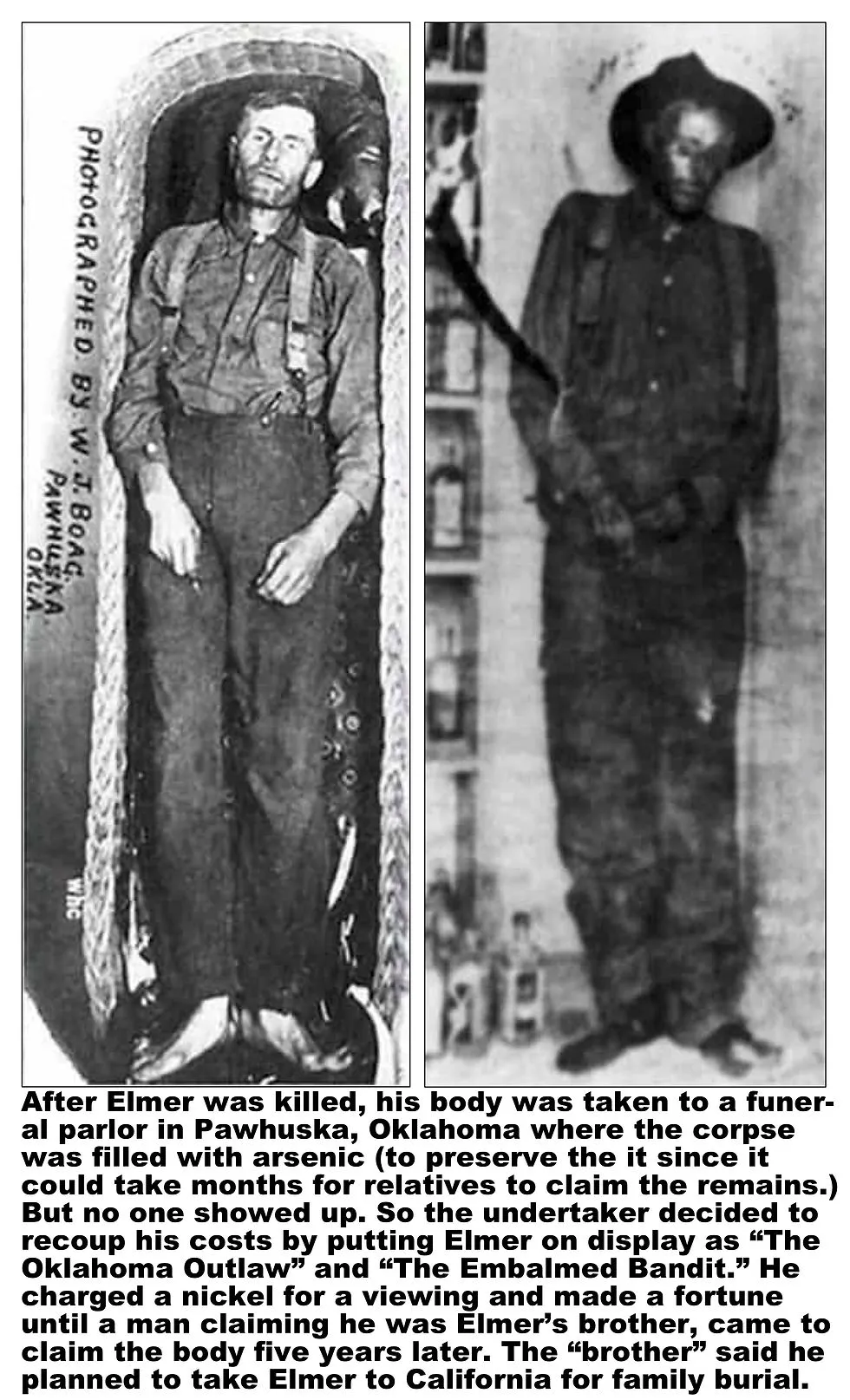 Photo: Elmer McCurdy, via static.wixstatic.com
His career ended in 1911 when a posse caught up with him in the Osage Hills of Oklahoma. McCurdy was shot and killed during the confrontation — a fairly unremarkable end for a fairly unremarkable outlaw. He was brought to a funeral home in Pawhuska, Oklahoma, where the undertaker, a man named Joseph Johnson, embalmed him using an arsenic-based preparation that was common at the time.
The arsenic worked exceptionally well. McCurdy's body mummified almost perfectly, and when no family came forward to claim him, Johnson made a practical decision: he put the body on display and charged a nickel to see it. He propped McCurdy up in the corner and told visitors they were looking at "The Bandit Who Wouldn't Give Up."
It was, by the standards of 1911, a reasonable business move.
The Long, Strange Journey
Five years later, two men showed up claiming to be McCurdy's brothers. They said they'd come to give him a proper burial. Johnson, moved by the apparent family reunion, released the body.
The men were not his brothers. They were carnival promoters.
What followed was one of the most improbable odysseys in American history. McCurdy's mummified body moved from carnival to carnival across the country for the next six decades, billed variously as a genuine outlaw corpse, a wax figure, and eventually just another prop in whatever attraction needed dressing up. He appeared at sideshows. He turned up in haunted houses. At some point in the 1960s, he was sold to a series of amusement operators who had no idea — or possibly didn't care — that they were dealing with actual human remains.
By the time he ended up hanging in that Long Beach funhouse, McCurdy had been dead for 65 years and had traveled farther in death than he ever managed in life.
The Investigation
Once the bone was discovered, the Long Beach Police Department took over. Identifying the body was not a quick process. The mummification meant there was no obvious cause of death visible, and nobody had any immediate reason to connect a funhouse prop in California to a dead Oklahoma outlaw from the Taft administration.
The breakthrough came from a medical examiner who noticed a 1924 penny and a ticket from a Los Angeles funhouse lodged inside the mummy's mouth — apparently placed there by a carnival operator at some point during McCurdy's long commercial career. That detail, combined with old photographs and records from the Oklahoma funeral home, eventually confirmed the identity.
Elmer McCurdy, outlaw, had been found.
The Burial, Finally
In April 1977, McCurdy was returned to Oklahoma and buried in the Summit View Cemetery in Guthrie — the same state where he had lived, robbed, and died. To make sure no one got any ideas about future exhumations, the state medical examiner had concrete poured directly over the coffin.
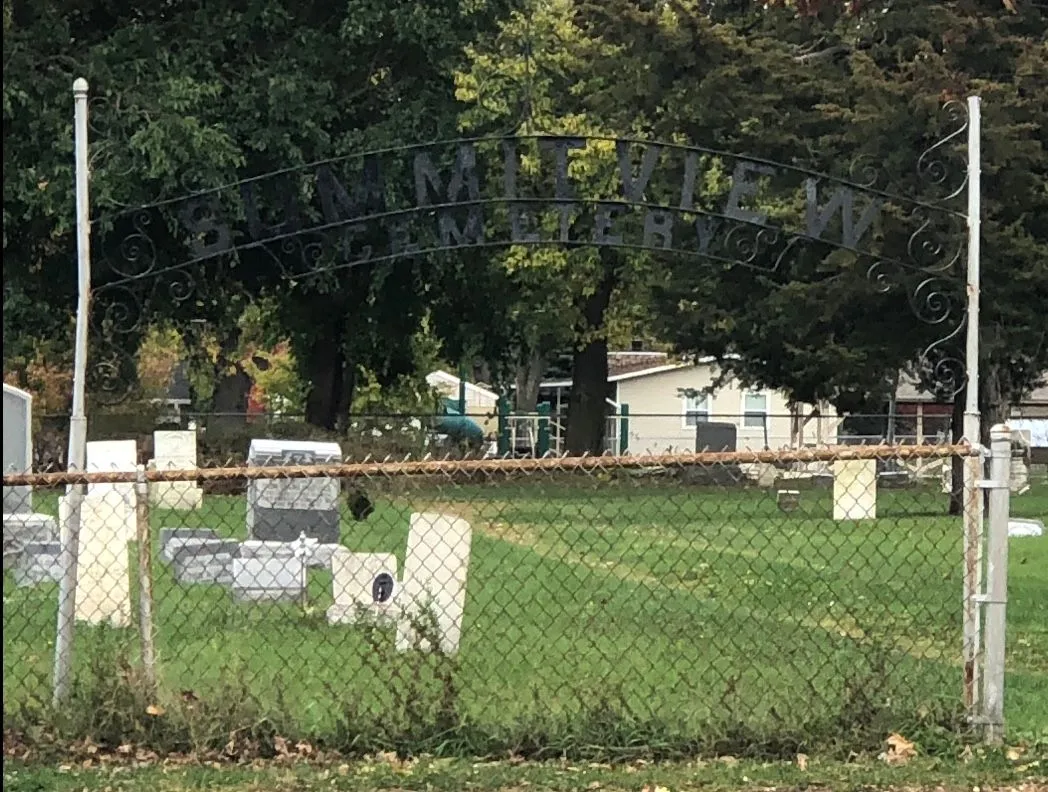 Photo: Summit View Cemetery, via images.findagrave.com
It was, by any measure, an extremely thorough ending.
The Jolt
The thing that makes this story genuinely hard to process is the sheer duration of it. For 65 years, a real human being was treated as a prop. He passed through dozens of hands. He was displayed to thousands of people. He appeared in amusement parks, sideshows, and funhouses across multiple decades — and at no point did anyone in the chain of custody stop and ask the obvious question.
It took a broken arm on a California film set to finally give Elmer McCurdy what he probably would have preferred all along: a name, a grave, and some concrete to make sure he stayed in it.