Lightning Strikes Twice: The Titanic's Sister Ship That Couldn't Escape the Family Curse
When History Repeats Itself in the Worst Possible Way
Some families seem cursed by tragedy. The Kennedys. The Hemingways. And, as it turns out, the Olympic-class ocean liners.
Most people know the story of the Titanic's sinking in 1912. Fewer know about her sister ship, the Britannic, which was supposed to be the "unsinkable" ship that finally got everything right. Instead, it became living proof that lightning can indeed strike twice—and sometimes the second strike is even more mysterious than the first.
The Ship That Was Supposed to Fix Everything
After the Titanic disaster, the White Star Line faced a public relations nightmare. Their flagship vessel—marketed as "practically unsinkable"—had gone down on its maiden voyage, taking 1,500 people with it.
The company's response was to double down on safety with the third and largest ship in their Olympic-class fleet: the Britannic. Originally planned as a luxury liner named Gigantic (a name they wisely changed after the Titanic sinking), the ship incorporated every lesson learned from the disaster.
The designers added more lifeboats—enough for everyone on board, plus 25% extra. They installed a double hull. They created more watertight compartments. They even positioned the bulkheads higher to prevent water from spilling over the top.
The Britannic was literally designed to survive a Titanic-style collision.
There was just one problem: by the time the ship was completed in 1914, World War I had begun, and luxury ocean travel wasn't exactly a priority.
From Luxury Liner to Hospital Ship
The British Admiralty requisitioned the Britannic before it could carry a single paying passenger, converting it into His Majesty's Hospital Ship Britannic. The grand dining rooms became surgical wards. The first-class suites were transformed into officers' quarters. The ship that was meant to restore confidence in ocean travel instead became a floating hospital.
In some ways, this seemed like the perfect solution. Hospital ships were protected under international law—they couldn't be attacked by enemy forces. The Britannic would serve a noble purpose while staying safely out of harm's way.
For two years, this plan worked perfectly. The ship made five successful voyages between England and the Mediterranean, transporting wounded soldiers from the Gallipoli campaign and other theaters of war. The Britannic proved to be an excellent hospital ship—stable, spacious, and well-equipped.
Then came the sixth voyage.
The Morning Everything Went Wrong
On November 21, 1916, the Britannic was steaming through the Aegean Sea near the Greek island of Kea, heading to pick up wounded British soldiers. It was a routine mission on a calm, clear morning.
At 8:12 AM, a massive explosion rocked the ship.
Unlike the Titanic's slow, grinding collision with an iceberg, the Britannic's disaster was sudden and violent. The blast occurred near the bow, on the starboard side, and immediately began flooding the ship's forward compartments.
Captain Charles Bartlett, who had been in his cabin reviewing charts, rushed to the bridge. What he found defied everything the ship's designers had promised.
Despite all the safety improvements, despite the watertight compartments and the double hull, the "unsinkable" Britannic was sinking—and fast.
The Mystery That Still Baffles Experts
What caused the explosion? That question has puzzled maritime historians for over a century.
The official explanation was that the ship struck a naval mine laid by a German U-boat. The Aegean Sea was known to be mined, and the location of the explosion was consistent with a mine strike.
But here's where the story gets strange: no one actually saw a mine.
Some witnesses reported seeing a torpedo track in the water moments before the explosion. Others claimed they saw a submarine periscope in the distance. A few insisted they heard the distinctive sound of a torpedo engine.
The German navy, for their part, denied any involvement. No U-boat commander ever claimed credit for sinking the Britannic, which would have been considered a significant victory.
A Sinking That Defied the Laws of Physics
Regardless of what caused the explosion, what happened next shouldn't have been possible.
The Britannic was designed to survive flooding in its first four compartments. The explosion breached the first three. According to every calculation, every computer model, every engineering analysis, the ship should have remained afloat.
Instead, it sank in just 55 minutes.
Investigators later discovered that someone had left several portholes open in the lower decks to provide ventilation for the wounded soldiers who were supposed to be picked up. As the ship listed to starboard, water poured through these openings, overwhelming the watertight compartments.
In other words, the Britannic sank because of a simple human error that made all the advanced safety features irrelevant.
The Rescue That Almost Became Another Disaster
Unlike the Titanic, the Britannic's sinking had one crucial advantage: it occurred in daylight, in calm seas, with rescue ships nearby.
Captain Bartlett ordered the lifeboats lowered immediately. The crew, trained extensively after the Titanic disaster, executed the evacuation with remarkable efficiency. Within 30 minutes, most of the 1,065 people aboard were safely in lifeboats.
But the story nearly had a much darker ending.
As the ship sank by the bow, it continued moving forward, creating a powerful suction that pulled several lifeboats back toward the sinking vessel. Two boats were caught in the ship's massive propellers, which were still turning as the stern rose out of the water.
Thirty people died in this final, horrible accident—crushed by the very ship they had successfully escaped.
The Sister Ship Curse
The Britannic's fate completed one of the most bizarre coincidences in maritime history. All three Olympic-class ships met dramatic ends:
- The Olympic, the eldest sister, survived both world wars but was scrapped in 1935 after a series of collisions and accidents that earned it the nickname "Old Reliable."
- The Titanic, the middle sister, sank on its maiden voyage in 1912 after hitting an iceberg.
- The Britannic, the youngest sister, sank in 1916 under mysterious circumstances that are still debated today.
Three ships, built by the same company, using the same basic design, with each successive vessel incorporating lessons learned from the previous disasters. Yet none of them achieved the long, successful career their builders envisioned.
The Wreck That Keeps Giving Up Secrets
The Britannic's wreck was discovered in 1975 by legendary ocean explorer Jacques Cousteau. Unlike the Titanic, which lies in crushing depths of the North Atlantic, the Britannic rests in relatively shallow water—about 400 feet down—making it accessible to modern diving technology.
Subsequent expeditions have revealed new details about the ship's final moments, but they've also deepened the mystery. The damage pattern suggests the explosion occurred outside the ship, consistent with a mine. But the force of the blast seems too powerful for a typical naval mine.
Some experts now theorize that the Britannic struck multiple mines simultaneously, or that the ship's own coal bunkers exploded after the initial blast. Others maintain that a torpedo was responsible, despite the lack of German records.
The Legacy of Lightning Striking Twice
The Britannic's story represents something more troubling than simple bad luck. It suggests that some disasters are so fundamental, so rooted in human nature and technological hubris, that they're almost impossible to prevent.
The White Star Line learned all the technical lessons from the Titanic disaster. They built a safer ship, trained their crews better, and followed every safety protocol. Yet they couldn't account for the human factors—the open portholes, the decision to continue steaming forward during the evacuation, the basic unpredictability of war.
In the end, the Britannic's fate proved that engineering can solve technical problems, but it can't solve the problem of being human in an unpredictable world.
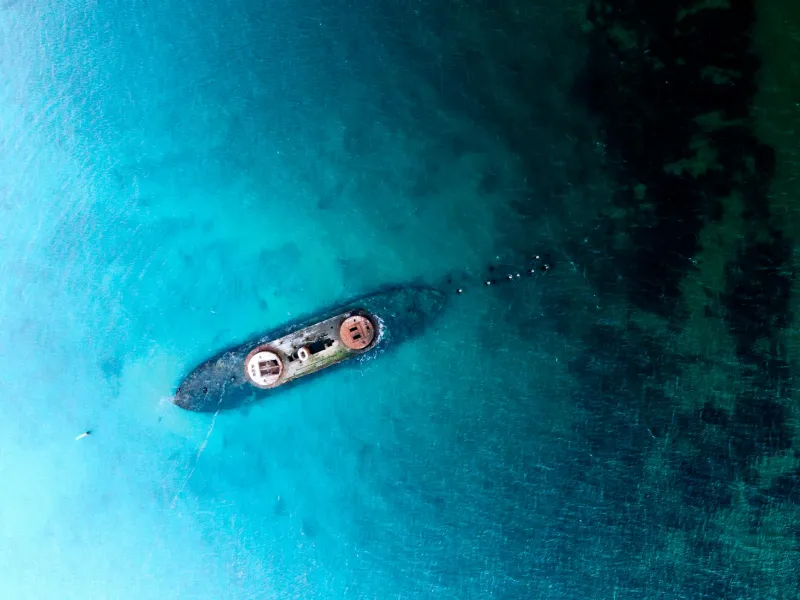
Today, the Britannic lies on the Aegean seabed, slowly deteriorating but still largely intact—a monument to the idea that sometimes, no matter how hard we try to learn from our mistakes, history finds a way to repeat itself anyway.
The ship that was supposed to prove the Titanic was a fluke instead proved something far more unsettling: that when it comes to disaster, lightning doesn't just strike twice—sometimes it aims for the same family.