A Lab Accident in Oregon Produced a Color the World Hadn't Seen in 200 Years — Then Things Got Complicated
Nobody Was Looking for Blue
Mas Subramanian wasn't trying to paint anything. The Oregon State University chemist was deep inside a materials science project, mixing metal oxides at extremely high temperatures in hopes of finding compounds with useful electronic properties. His lab was chasing breakthroughs in magnetism and electronics — the kind of research that ends up inside computers and medical devices, not on the walls of living rooms.
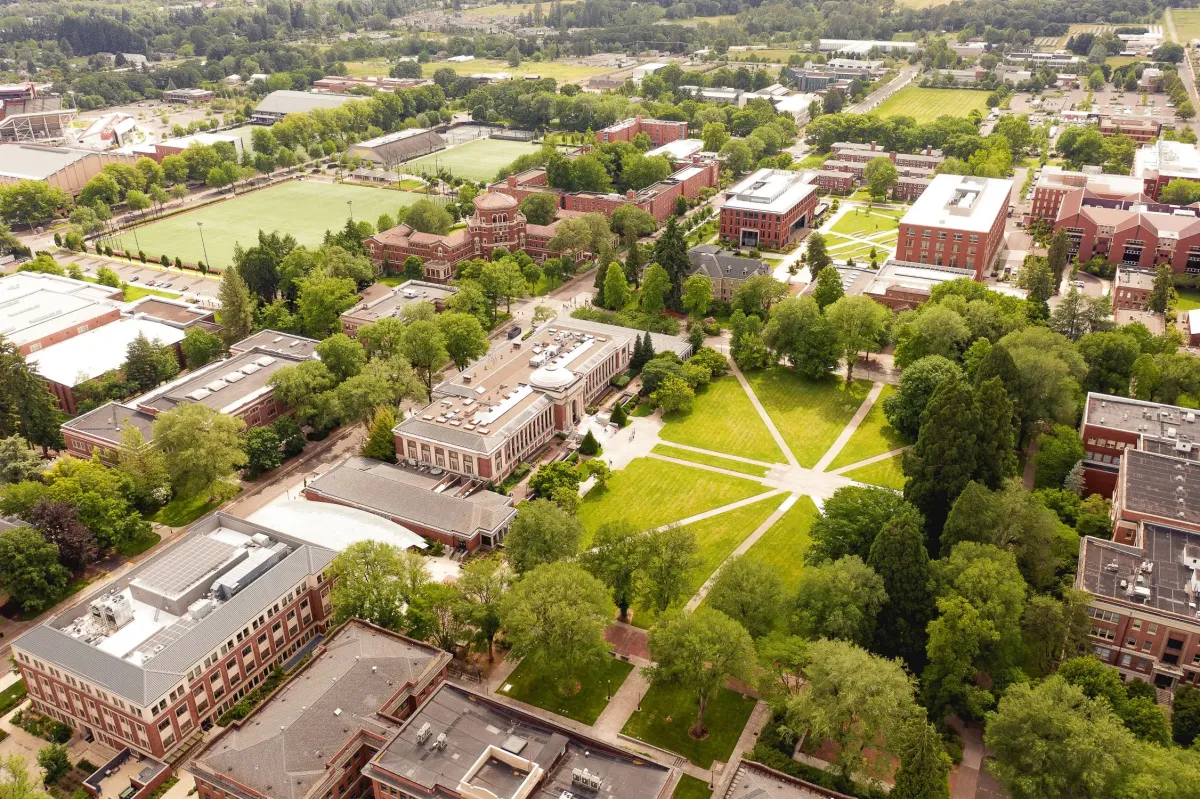 Photo: Oregon State University, via newstudents.oregonstate.edu
 Photo: Mas Subramanian, via chemistry.oregonstate.edu
Then one of his graduate students pulled a sample out of the furnace and held up something that stopped everyone in the room cold.
It was blue. Intensely, almost impossibly blue. A blue that didn't look quite like anything anyone in that lab had seen before.
Subramanian described the moment later with the kind of understatement that only scientists can pull off: he said they were "surprised."
That's one way to put it.
The First New Blue in Two Centuries
To understand why this matters, you have to appreciate how rare new pigments actually are. The history of blue dye and pigment is notoriously brutal — ancient Egyptians spent enormous effort synthesizing Egyptian Blue around 2,200 BC. Ultramarine, derived from lapis lazuli, was so expensive in the Renaissance that it was reserved almost exclusively for painting the Virgin Mary's robes. Prussian Blue, discovered accidentally in Berlin around 1704, was the last genuinely new blue pigment the world had seen before Subramanian's furnace produced something entirely different.
That was over 300 years ago.
The compound Subramanian's team created was a mix of yttrium, indium, and manganese oxides — which is why it eventually got the slightly clunky but accurate name YInMn Blue. Chemically, the way it works is almost elegant: the manganese ions inside the crystal structure absorb red and green wavelengths of light, and what bounces back is a vivid, saturated blue that holds up under heat, ultraviolet light, and harsh chemicals in ways that existing blue pigments simply don't.
It doesn't fade. It doesn't degrade easily. It reflects infrared radiation, which means surfaces painted with it stay cooler — a property that has significant implications for buildings, rooftops, and even military vehicles trying to reduce heat signatures.
By any measure, this was a remarkable accident.
When a Color Gets an Owner
Here's where the story takes a turn that feels less like a science documentary and more like a legal thriller.
Oregon State University, as the institution where the discovery occurred, moved quickly to patent the compound. That's standard practice — universities routinely patent discoveries made in their labs, then license the technology to commercial partners. The system exists to fund further research and, in theory, to get useful discoveries out into the world faster.
In 2015, OSU licensed YInMn Blue to Shepherd Color Company, a Cincinnati-based pigment manufacturer. The company began the lengthy process of getting the pigment approved for commercial use, navigating safety reviews and regulatory requirements. By 2016, limited commercial availability began. By 2020, it was available to artists through a partnership with Gamblin Artists Colors.
Subramanian, for his part, became the public face of the discovery and has spoken enthusiastically about it in interviews and lectures. He wasn't exactly left in the cold — the recognition, the papers, the media coverage all attached to his name. But the pigment itself, the actual compound, the thing his lab accidentally conjured out of a furnace experiment? That belonged to the institution and the licensing arrangement, not to him.
This is completely normal in academic science. It's also, when you hold it up to the light, a genuinely strange arrangement. A person accidentally creates something the world has never seen — a new color, something so fundamental it changes what human eyes can look at — and the question of ownership is answered almost immediately by paperwork.
Why It Matters Beyond the Lab
The philosophical wrinkle here is worth sitting with for a moment. Colors, as concepts, aren't ownable. Nobody holds a patent on blue. But a specific chemical process that reliably produces a specific visual experience? That's a different question, and intellectual property law has a very clear answer to it.
YInMn Blue is now used in commercial coatings, industrial applications, and fine art paints. Its heat-reflecting properties have attracted interest from architects and engineers looking for sustainable building materials. There are ongoing research threads exploring whether similar accidental discoveries in the same materials family might produce other new colors — other gaps in the visible spectrum that existing pigments simply never reached.
Subramanian has said he hopes the compound eventually makes it into everyday paint, the kind you'd find at a hardware store. Given how slowly pigment supply chains move, that may still be years away.
But somewhere in a lab in Oregon, on a day when nobody was looking for anything beautiful, a graduate student pulled a sample out of a furnace and the world quietly got a new color.
It just took the lawyers a few months to figure out who it belonged to.