He Helped Build the Internet. Now He's Terrified of What Happens When It Forgets Everything.
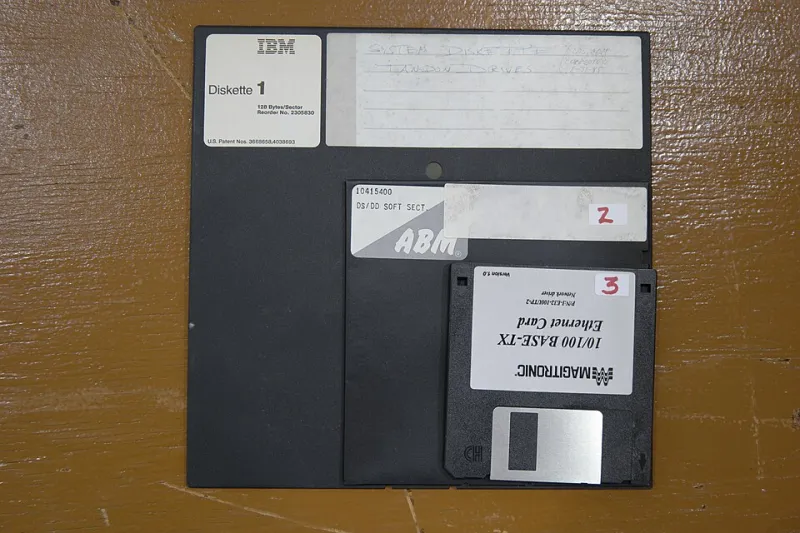
Photo: Kevin Savetz, CC BY 2.0, via Wikimedia Commons
The Man Who Built the Highway
If you had to pick one person to blame — or thank — for the internet, Vint Cerf would be near the top of the list. In the early 1970s, Cerf and his colleague Bob Kahn developed TCP/IP, the set of communication protocols that determine how data moves between computers. It's not an exaggeration to say that without that work, the modern internet as we know it simply doesn't exist.
 Photo: Bob Kahn, via spectrum.ieee.org
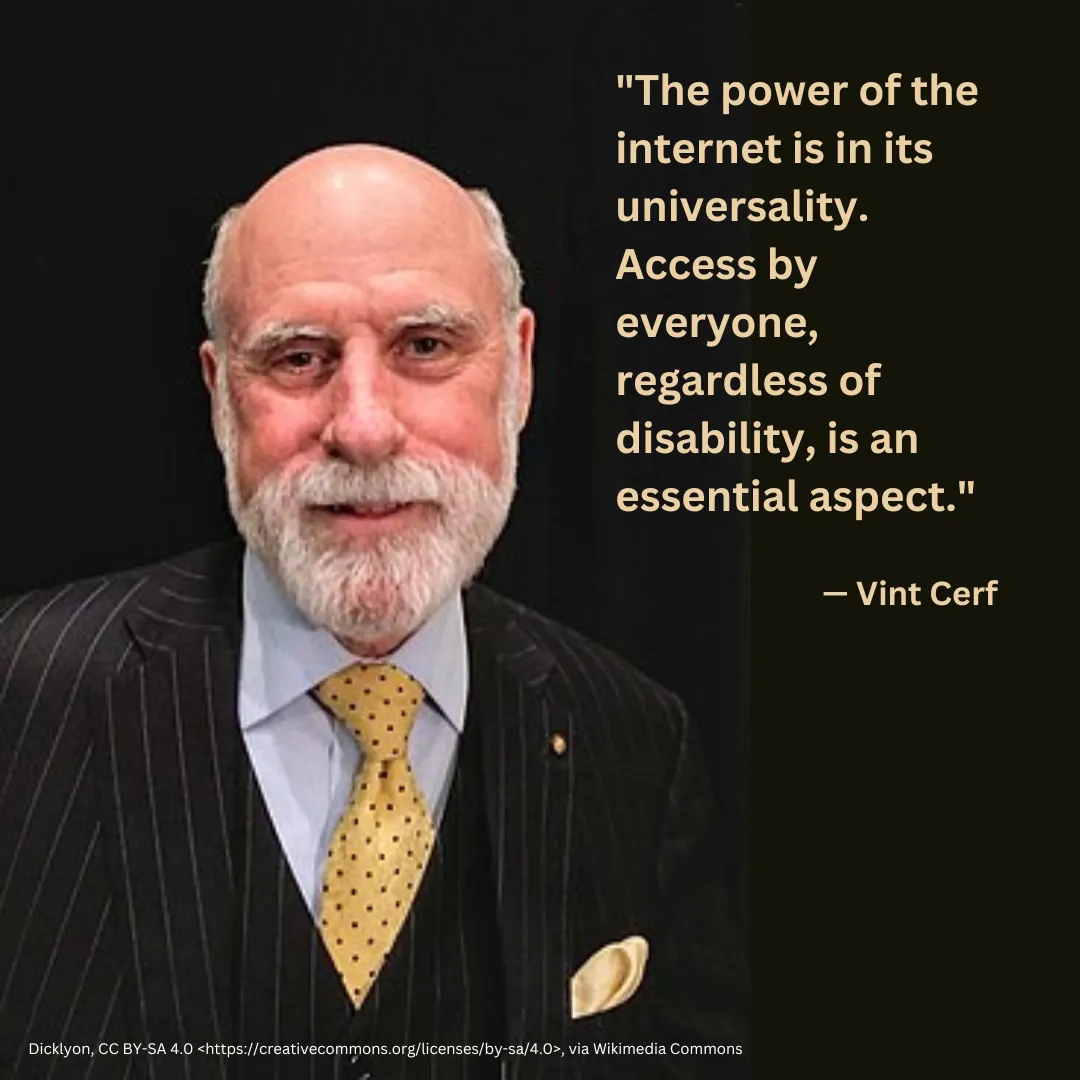 Photo: Vint Cerf, via sepulvedauu.org
Cerf went on to hold senior positions at DARPA, MCI, and eventually Google, where he served as Chief Internet Evangelist — a title that sounds made up but was very real. He has received the Presidential Medal of Freedom, the National Medal of Technology, and roughly every other honor the technology world has to offer. He is, by any reasonable measure, one of the most consequential engineers in human history.
He is also, depending on how you look at it, one of the internet's most worried critics.
The Warning Nobody Wanted to Hear
For decades, Cerf has been raising an alarm that sounds almost paradoxical coming from him: the digital systems that now store most of human civilization's knowledge may be fundamentally incapable of preserving it.
The problem isn't dramatic. It's not a cyberattack or a solar flare or a catastrophic server failure. It's something far more mundane, and in some ways far more frightening: file formats become obsolete.
Think about it this way. If you wrote a document in Microsoft Word in 1995 and saved it on a floppy disk, the chances of you being able to open that file today — with today's hardware and software — are not great. The disk format may be unreadable. The software may no longer exist. The file format itself may have changed so dramatically that modern programs can't interpret it correctly. That document, which felt permanent when you saved it, has effectively vanished.
Now scale that problem up. Not one document. Every document. Every photograph. Every government record, medical file, scientific dataset, legal archive, and cultural artifact that has been digitized and stored over the past several decades. All of it saved in formats that are already aging, on hardware that is already becoming obsolete, running on software that companies have already stopped supporting.
The Digital Dark Ages
Cerf calls this scenario a "digital Dark Ages," and the comparison to the actual Dark Ages is deliberate. After the fall of Rome, centuries of accumulated knowledge — scientific, philosophical, administrative — were lost or severely fragmented because the physical objects containing that knowledge were destroyed or simply decayed. We know the knowledge existed. We just can't access most of it.
Cerf's argument is that we are building ourselves into an analogous situation, except instead of fire and political collapse, the mechanism is something as boring as a software update. Future generations, he warns, may look back at the early 21st century the way we look back at the ancient world — knowing that a vast amount of information existed, but having no practical way to retrieve it.
He made this argument publicly at a conference in 2015, and it landed like a small bomb. Here was one of the internet's own architects standing up and saying, essentially: we may have built the greatest information storage system in human history, and we may also be ensuring that most of what we store in it eventually becomes permanently inaccessible.
The Proposed Solution
Cerf isn't just raising the alarm — he has been actively working on potential fixes, which is either reassuring or a sign of how seriously he takes the problem, depending on your disposition.
One approach he has championed is the concept of "digital vellum" — essentially, a system that would preserve not just the files themselves but the complete software and hardware environment needed to open them. Instead of just archiving a document, you'd archive the entire context required to read it: the operating system, the application, the file format specifications. Future users could then run a kind of simulation of 2024's computing environment in order to access 2024's files.
It's a technically complex solution to a technically complex problem, and it remains very much a work in progress. The urgency, Cerf argues, is real — because every year we wait, more files are saved in formats that are one software generation away from becoming unreadable.
The Irony That Jolts
What makes Cerf's position genuinely stunning is the symmetry of it. He helped design the system that made it possible for humanity to store more information than at any other point in history. And he has spent decades arguing that without serious intervention, most of that information may not survive long enough to matter.
He didn't build a library and then watch it burn. He built a library and then noticed, very carefully, that the books were written in languages that future generations might not be able to read — and that nobody in charge seemed particularly concerned about it.
The man who helped invent the internet is now one of the loudest voices arguing that the internet, as currently designed, is a fragile vessel for human memory. That's not a contradiction. That's just what happens when someone pays close enough attention to what they've actually built.
And if that doesn't make you want to back up your files, nothing will.